 By admin
 Are your feet trying to tell you something you’re ignoring? From tingling toes and burning soles at night to stubborn cracks and ankle swelling, these aren’t just “part of getting older.” In reality, these are the body’s early-warning sirens signaling rising blood sugar, often appearing long before a lab report ever hits your doctor’s desk.
It is incredibly common for people to shrug off persistent numbness, heat, skin that refuses to heal, or strange color changes, blaming them on uncomfortable shoes or a busy day. Meanwhile, high sugar levels are quietly damaging your nerves, tiny blood vessels, and the essential delivery systems that keep your lower legs healthy and functional.
The frustrating reality? Your body is designed to mask these symptoms until they become impossible to ignore. By the time you finally take notice, the nerves are already frayed, your circulation is struggling, and your body is desperately trying to repair damage that has been accumulating for years.
This is the critical detail most people miss: your feet are often the very first place that high sugar levels leave their mark.
The Foot Alarm That Starts Before Diagnosis
The earliest red flag is often a sensation of pins-and-needles, tingling, or numbness that seems to come and go without any logical explanation. At first, it feels like your foot simply fell asleep, but when it begins happening regularly, it’s a sign that something deeper is going on.
Think of your nerves as electrical wiring protected by insulation. When blood sugar levels are chronically high, that protective coating begins to break down. Once the insulation is stripped away, the signals traveling through your nerves become distorted, weak, or erratic.
If you find yourself sitting on the edge of the bed every morning, massaging your toes because they feel “dead,” you aren’t just experiencing a random quirk. You are witnessing your nervous system losing its ability to communicate effectively.
When sugar levels remain elevated, your feet effectively become the body’s loudspeaker. They stop whispering and start buzzing, stinging, and going numb in a cycle that is as predictable as it is painful.
Why the Burning Hits at Night
Burning sensations in the soles of the feet are a distinct type of warning, and they tend to flare up most intensely when the house is quiet and you are trying to sleep. During the day, distractions keep you from noticing, but at night, your brain fixates on the discomfort.
Imagine a smoke alarm with a faulty sensor: the room might be perfectly safe, but the alarm shrieks because the wiring is damaged. This is exactly what happens with damaged nerves—they send “heat” signals to your brain even when your feet aren’t actually hot.
Your body effectively becomes a faulty phone line. The signal is sent, but it is corrupted, turning what should be a simple message into a relentless, burning buzz.
The result is a brutal cycle: your sleep is constantly interrupted, you find yourself tossing your feet out from under the covers for relief, and every night turns into a battle against your own nervous system.
While you won’t see it on a supplement bottle, a simple daily walk and a reduction in added sugar can fundamentally change the environment your nerves rely on.
Why Wounds Refuse to Close
The situation escalates from uncomfortable to dangerous when a minor cut, scrape, or blister refuses to heal. Instead of fading away, the wound lingers, leaving your body vulnerable.
Excess sugar thickens your blood and narrows the tiny blood vessels that supply your feet. Think of it like trying to water a garden with a kinked hose—the water is there, and the pressure is present, but the plants at the end of the line are still starving for hydration.
Because the repair crew can’t reach the site of the injury efficiently, even a tiny sore can spiral into a major complication. The skin loses its ability to seal itself, and the wound becomes an open invitation for bacteria.
By the time a wound becomes noticeably problematic, your body has likely been struggling to maintain its defenses for a long time.
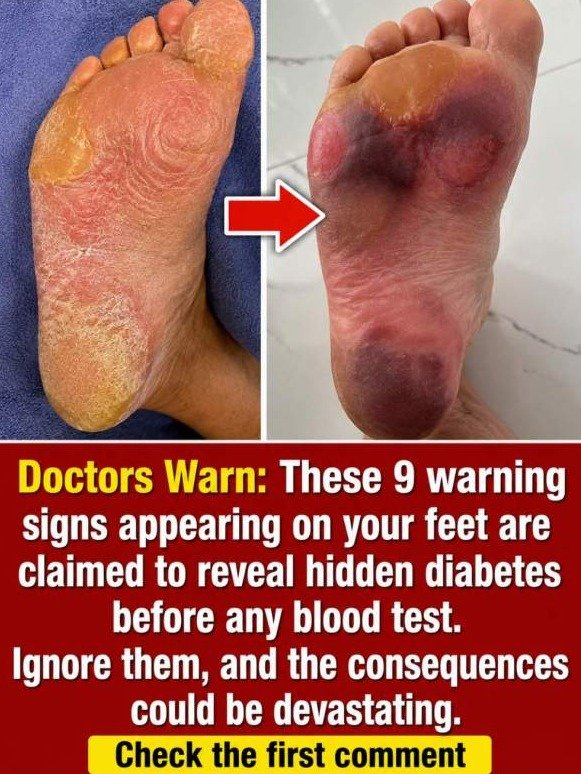
Why Swelling and Color Changes Matter
Do you notice your ankles and feet puffing up by the end of the day, leaving deep imprints from your socks? Or perhaps your legs are taking on a bluish or red tint? Many people dismiss this as a minor cosmetic issue, but it is actually a sign that your circulation is being throttled.
Think of your lower legs as the final stop on a delivery route. When the roads are blocked, the delivery trucks cannot get through. Vital oxygen, nutrients, and repair materials aren’t reaching your tissues effectively.
This leads to feet that look puffy, heavy, and discolored, feeling exhausted in a way that rest cannot fix. This pattern often persists into the morning, manifesting as stiffness when you stand up or skin that feels tight and strained.
Why Men Often Miss the Signal First
Men are notoriously prone to labeling these symptoms as arthritis, signs of aging, or the result of an old sports injury. They often reach for pain relievers and keep pushing through, never realizing that the “pain” is actually a symptom of systemic issues.
Sometimes the warning doesn’t manifest as pain at all. It might show up as chronically cold feet even in the summer, or hair thinning on the lower legs—a subtle sign that the blood supply has been restricted for years.
Consider hair follicles like small plants in a garden. When the irrigation system fails, they don’t all die at once; they simply stop thriving, one by one, until the bare patches reveal the truth. High sugar acts in the same way, quietly starving the tissues furthest from the heart.
Because there is no profit in taking a walk around the block, the most effective, low-cost solutions are rarely the ones getting the most attention.
Why Women Feel It in a Different Way
Women are more likely to notice dry, cracked heels first, particularly when high-end lotions fail to provide relief. This isn’t just a matter of hydration; it’s a breakdown of the skin’s moisture-control system, caused by the same underlying sugar-related issues.
The skin can become as brittle as old paint on a windowsill, prone to cracking under the slightest pressure. As the day progresses, walking becomes increasingly painful, and by evening, the feet feel raw and exhausted.
Once the skin on your lower legs and feet loses its natural moisture balance, those cracks become more than just a cosmetic nuisance—they become potential entry points for infection.
The Third Place You Feel It
Swelling, burning, and numbness all point toward the same root cause: a body struggling to process sugar and restore healthy blood flow.
This is why daily habits are so transformative. Incorporating brisk walks, ankle rotations, and toe stretches, combined with a reduction in sugar, helps force fresh circulation into tissues that have been neglected. Over time, you will notice the difference—your feet will feel lighter, your skin will look healthier, and those late-night electrical stings will begin to fade.
Your body has an incredible capacity to repair itself; it just needs the right fuel and enough movement to get the job done.
P.S.
There is one common habit that sabotages your recovery before it even begins: spending long hours sitting still and expecting your feet to bounce back on their own. Without movement, there is no circulation, and without circulation, your nerves and vessels continue to suffer.
Start by focusing on the simplest change first: movement. When you pair consistent activity with the right nutritional support, you might be shocked at how quickly your body begins to turn things around.
This article is for informational purposes only and does not replace professional medical advice. Please consult your healthcare provider for personalized guidance.