 By admin
 Using baking soda to treat wrinkles and dark spots sounds like a skincare hack, but the reality is a nightmare for your skin barrier. While that white paste might provide a temporary appearance of smoothness, it is secretly stripping away your skin’s vital outer seal, throwing your natural pH levels into chaos, and leaving your delicate tissue feeling tight, inflamed, and completely overstressed.
You’ve likely seen the viral posts promising a “miracle” fast fix for age spots, deep wrinkles, and that dull, tired complexion we all struggle with. That’s exactly why these trends go viral: every woman who has scrutinized sun spots on her cheeks or fine lines around her mouth knows the desperate urge to try anything that promises a bright, refreshed finish.
But this is where the strategy backfires. Your skin isn’t a kitchen countertop, and baking soda is far from a gentle polish—it is an abrasive, chemically aggressive substance that forces your face into a defensive, irritated state rather than a rejuvenated one.
Your complexion doesn’t need a harsh scrub that delivers a win for 30 seconds only to cause three days of damage. It requires a healthy, intact barrier that allows your skin to shed dull, uneven cells naturally and safely.
The Surface Drag That Tricks People
Think of your skin barrier as the protective wax on a car. Once that coating is scrubbed away, the paint underneath becomes exposed, dehydrated, and significantly more vulnerable to damage from every bit of sun and wind it encounters.
Baking soda does absolutely nothing to rebuild that protective layer. Instead, it grinds it down, which is why your face might look deceptively bright immediately after rinsing, only to feel stretched, squeaky, or painfully stingy by the time you go to bed.
That chalky, tight sensation is a warning sign. Your skin isn’t being nourished; it is being aggressively stripped.
Once the barrier begins to fail, the first thing people notice isn’t just dryness—it’s that papery, pulled-tight texture that makes every fine line around your eyes and mouth look deeper and more pronounced, as if they’ve been highlighted by a pen.
Why Wrinkles Look Softer — Then Come Back Meaner
Wrinkles often appear less visible after a harsh scrub because the surface flakes are forcibly removed and the skin swells slightly due to inflammation. This isn’t anti-aging; it’s a temporary surface plump triggered by cellular distress.
It is the visual equivalent of trying to smooth a wrinkled shirt with a wet hand. The crease looks temporarily relaxed, but the fabric itself remains damaged.
Once your skin loses that moisture, those lines often return looking even sharper. Light stops reflecting evenly, your makeup begins to settle into creases, and your face takes on an exhausted, weathered look that no expensive cream can easily reverse.
The real enemy isn’t the wrinkle itself; it is the dry, compromised terrain underneath it.
Why Dark Spots Don’t Vanish Under a Gritty Paste
Age spots and sun-induced freckles aren’t just dust on the surface of your skin. They are pigmentation embedded in the deeper layers, and baking soda lacks the power to “sweep” that pigment away.
Imagine scrubbing a stained countertop with a harsh wire brush. The stain remains, but you’ve managed to ruin the surface finish, making the contrast look even more obvious and jagged than before.
Here is the hard truth: the more you damage your barrier, the more reactive your skin becomes to UV light, which often makes those dark patches appear even more prominent in direct daylight.
The promise of “erasing” spots with a kitchen staple is a dangerous trap. It prioritizes speed, but your skin pays the price in redness, sensitivity, and a texture that feels sanded down rather than truly renewed.
The Hidden Mechanism Behind the “Glow”
What this mixture truly creates is a forced surface reset I call the Barrier Shock Cycle. Your skin is stripped raw, the top layer peels away inconsistently, and your face looks bright only because the roughness has been physically blasted off.
That fleeting glow is a total illusion. It’s like wiping condensation off a foggy mirror and assuming you’ve fixed the glass, when all you’ve done is create a temporary opening to see the underlying damage.
Even if you add coconut oil for slip or honey for a cushion, it’s just a disguise. The baking soda remains a blunt, aggressive force acting on your skin.
The massive beauty industry rarely speaks on this because telling people to use cheap pantry staples doesn’t sell high-end serums or luxury routines. A “miracle” that costs pennies is a threat to their bottom line.
Why Women Notice the Damage in a Different Way
For those fighting sun spots, the realization usually hits while looking in the mirror. You notice the spots are still there, the mouth lines are still casting shadows, and now your skin is so raw that your daily moisturizer burns upon application.
It is a cruel irony: the very face you were trying to rejuvenate begins to act like it’s aged prematurely. It flushes easily, fails to retain moisture, and reacts to the environment like skin that has lost its natural defense system.
Over time, the damage becomes obvious. Your skin loses its natural luminosity, foundation looks cakey on dry patches, and that “quick fix” turns into a recurring skincare disaster.
What you truly deserve is skin that looks rested, clear, and healthy without having to punish your face to achieve it.
The Third Place You Feel It
The tightness isn’t just an aesthetic issue. Once that barrier is compromised, your face may feel hot, itchy, and perpetually thirsty, similar to the feeling of being exposed to harsh, dry winds without any protection.
Think of it like a brick wall with the mortar scraped out. The wall technically stands, but it is no longer sealed against the elements, letting every bit of moisture escape.
This is why faces often look flatter, rougher, and more reactive once the fake “glow” disappears. Your skin is stuck in a painful tug-of-war between trying to protect itself and trying to recover from your latest DIY treatment.
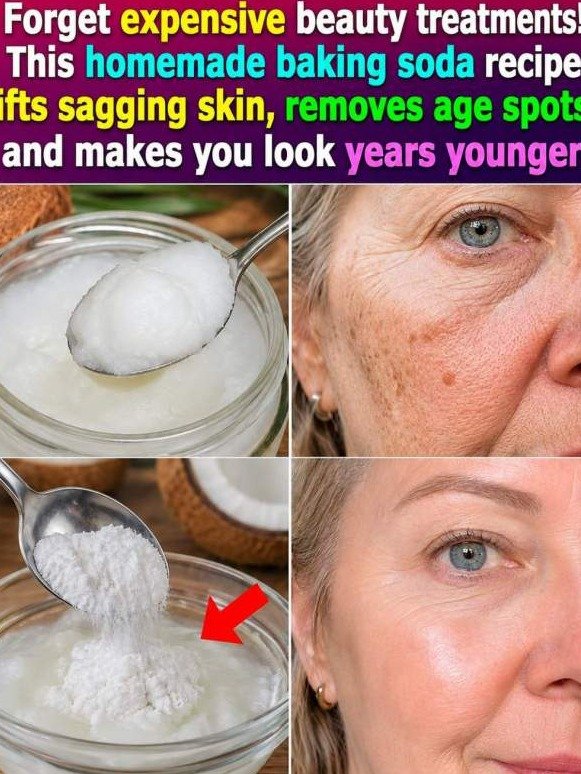
The “after” photos in those ads are the bait. The real question is: is your skin actually capable of surviving the journey they’re selling you?
P.S.
Applying this paste immediately after a hot shower is a recipe for disaster. Your skin is already soft and permeable, meaning the gritty mixture bites deeper, leaving your face looking flushed, papery, and raw instead of refreshed.
There is, however, a specific combination that can truly transform skin texture, and it relies on an ingredient that most people completely overlook.
This article is for informational purposes only and does not replace professional medical advice. Please consult your healthcare provider for personalized guidance.