 By admin
 You might have heard whispers of its use in certain traditional practices, but let’s be clear: the widespread claims that Purple Maguey can effectively treat serious conditions like urinary infections, diabetes, high blood pressure, liver disease, or asthma lack solid scientific backing in human studies. Given its potential to cause irritation and the scarcity of comprehensive safety data, it’s vital not to mistake this plant for a verified medical treatment.
This article will cut through the noise, diving deep into what we truly understand about Purple Maguey, exploring its historical uses, highlighting areas where science is still seeking answers, and, most importantly, outlining the critical safety measures you must consider.
🌸 What Is Purple Maguey?
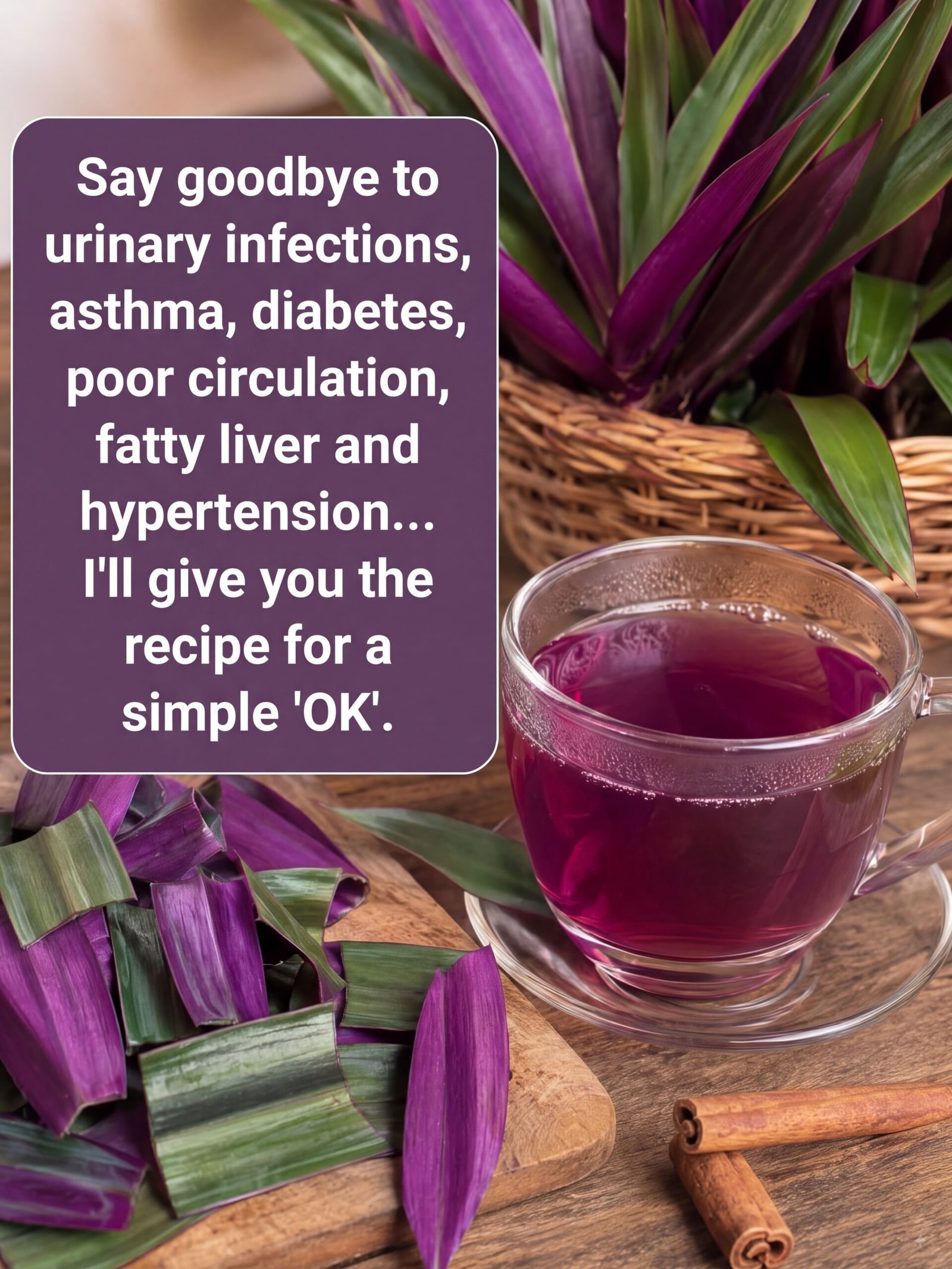
Tradescantia spathacea is a vibrant tropical plant, a proud member of the Commelinaceae family. It’s often cherished and cultivated purely for its stunning, eye-catching foliage, making it a popular ornamental.
Within its striking leaves, you’ll find a fascinating array of naturally occurring plant compounds, including flavonoids, various phenolic compounds, and other intriguing phytochemicals, all of which have caught the attention of researchers in laboratory settings.
These particular compounds have sparked considerable interest because some have exhibited promising antioxidant or anti-inflammatory effects in experimental research.
However, it’s crucial to understand that positive findings in a lab environment don’t automatically translate to the same beneficial effects when consumed by humans as a tea or infusion.
🌿 6 Traditional Uses and Intriguing Areas of Research
1. Antioxidant Properties
Purple Maguey is known to contain plant compounds that have shown demonstrable antioxidant activity in early scientific investigations.
Antioxidants play a vital role in safeguarding our cells from oxidative stress, a natural byproduct of normal metabolic processes and various environmental influences.
Despite these initial findings, extensive further research is essential to conclusively determine the real-world health benefits of regularly consuming this plant.
2. Traditional Use for General Wellness
Across various traditional practices, preparations derived from diverse plants are often incorporated into broader herbal wellness rituals.
Purple Maguey has indeed found its way into some folk remedies, yet it’s important to remember that traditional use alone doesn’t validate a plant’s ability to prevent or effectively treat a specific medical condition.
For this reason, it’s far more accurate to classify it as a traditional herbal ingredient rather than a scientifically proven medicine.
3. Interest in Metabolic Health
Some experimental studies focusing on Tradescantia spathacea and its unique plant compounds have begun to explore potential effects on metabolic processes.
This has sparked curiosity about whether plant extracts could eventually offer applications related to managing glucose metabolism.
However, it is vital to acknowledge that there is currently insufficient high-quality clinical evidence to confidently recommend Purple Maguey for the treatment of diabetes or for blood sugar regulation.
Individuals living with diabetes should absolutely never substitute their prescribed medications with any herbal preparations.
4. Research Into Anti-Inflammatory Activity
Specific compounds identified in plants belonging to the Tradescantia genus have indeed exhibited biological activity when tested in controlled laboratory research.
This observation has naturally fueled interest in their potential anti-inflammatory characteristics.
Nevertheless, the existing evidence is simply not enough to assert that consuming Purple Maguey tea can effectively treat conditions such as arthritis, asthma, various infections, or other chronic inflammatory disorders.
5. Traditional Interest in Digestive and Urinary Health
Historically, some traditional herbal practices have incorporated plant-based preparations with the aim of supporting digestive or urinary tract well-being.
It is critical to state that there is no credible scientific evidence confirming that Purple Maguey can cure urinary tract infections or effectively eliminate bacteria from the kidneys or bladder.
If you experience symptoms like painful urination, fever, back discomfort, blood in your urine, or an unusual frequency of urination, it’s imperative to consult a healthcare professional immediately, as untreated urinary infections can lead to serious health complications.
6. Plant-Based Wellness and Botanical Research
Purple Maguey continues to be a captivating subject within the realms of botanical and phytochemical research.
Its naturally occurring compounds certainly possess properties that warrant further investigation, but researchers require substantially more robust evidence from controlled human studies before any specific health claims can be definitively validated.
🍵 Can You Safely Make Purple Maguey Tea?
Given that the safety profile for consuming Tradescantia spathacea leaves is not yet thoroughly established, I cannot recommend popular, concentrated recipes, such as the ‘4-leaf, 15-minute boiling method,’ as a medically endorsed or safe treatment.
Should you stumble upon traditional recipes online or elsewhere, please keep these crucial points in mind:
- Accurate plant identification is absolutely essential.
- Ornamental plants, especially those from nurseries, may have been treated with pesticides or other potentially harmful chemicals.
- The appropriate dosage and the long-term safety of consumption remain largely unestablished.
- More concentrated preparations inherently carry a higher risk of adverse or unwanted effects.
Never consume a plant simply because it’s labeled ‘natural’ or because it happens to be growing in your garden.
⚠️ Important Safety Precautions
When considering Purple Maguey, exercising extreme caution is not just appropriate, it’s absolutely necessary.
You should avoid self-treating with this plant if you:
- Are currently pregnant or breastfeeding.
- Are taking any prescription medications.
- Have a history of diabetes or blood pressure irregularities.
- Are dealing with kidney or liver disease.
- Have any other chronic medical condition.
- Are considering using the plant to treat a diagnosed infection.
Furthermore, under no circumstances should you apply unknown plant preparations to your eyes, open wounds, or any sensitive skin areas.
Should you experience any adverse reactions after consuming the plant, such as irritation, nausea, vomiting, abdominal discomfort, dizziness, or any other unusual symptoms, cease use immediately and consult a medical professional without delay.
🌱 A Safer Way to Appreciate Purple Maguey
For the vast majority of individuals, the most secure and delightful way to enjoy Tradescantia spathacea is simply by appreciating it as an ornamental plant.
Its vibrant and unique foliage can effortlessly enhance the beauty of both your indoor and outdoor environments, all without the need for any internal consumption.
If your primary goal is to boost your antioxidant intake or generally support your overall health, there are many well-researched and safely established options available, including:
- Spinach and a wide variety of other leafy greens
- Blueberries, raspberries, and other delicious berries
- Refreshing citrus fruits
- Nutritious beans and legumes
- Wholesome nuts and seeds
- A diverse array of colorful vegetables
- Invigorating green tea
These food items boast significantly more established nutritional benefits and robust safety profiles for consumption.
❓ Can Purple Maguey Really Treat Diabetes, UTIs, or Asthma?
The conclusive clinical evidence to support such claims simply does not exist.
While early-stage laboratory research can be intriguing and open new avenues for study, it should never be mistaken for definitive proof that the plant effectively treats diseases in human beings.
Specifically, remember:
- It should never be used as a substitute for prescribed diabetes medication.
- It should not replace antibiotics necessary for a urinary infection.
- It should never be seen as a replacement for asthma medication or an inhaler.
- It should not be considered a viable treatment for serious conditions like liver disease or hypertension.
While natural remedies can sometimes be explored as complementary wellness practices, genuine medical conditions demand proper diagnosis and evidence-based treatment from qualified healthcare professionals.
✅ Final Thoughts
Purple Maguey (Tradescantia spathacea) is undeniably an attractive tropical plant, boasting a rich history of traditional use and intriguing phytochemical properties.
However, while some preliminary research might hint at antioxidant and other biological activities, there is still a significant lack of robust human evidence to substantiate the bold medicinal claims frequently encountered online.
Instead of perceiving Purple Maguey as a ‘miracle cure,’ it’s far more responsible to view it as a fascinating botanical specimen whose potential health applications require much more thorough and rigorous scientific investigation.
Remember, ‘natural’ does not automatically equate to ‘safe,’ and historical traditional use alone does not definitively prove effectiveness. When it comes to your health, always prioritize evidence, exercise moderation, and seek professional medical guidance above all else.