 By admin
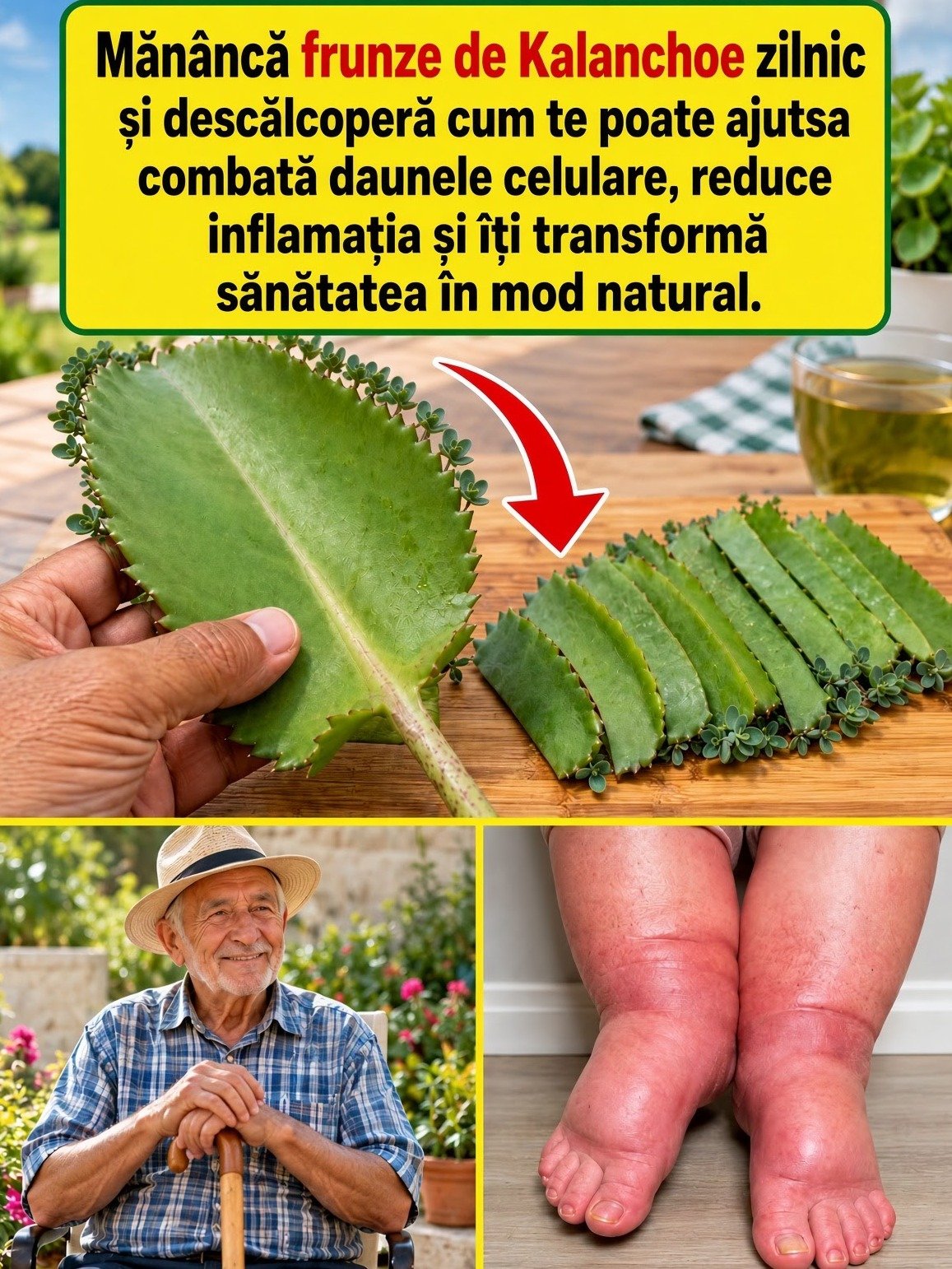
 You probably have a Kalanchoe plant in your home right now, or you’ve admired its vibrant blooms in a friend’s window. With its thick, succulent leaves and striking decorative appeal, Kalanchoe is undeniably a showstopper, sometimes even sprouting tiny plantlets along its leaf margins, adding to its intrigue.
While Kalanchoe is primarily celebrated as a stunning ornamental plant, various species also boast a rich and lengthy history of use in traditional practices across specific global regions.
More recently, this fascinating plant has captured the attention of scientific researchers, drawn by the unique natural compounds discovered within its diverse species.
However, here lies a critically important distinction that often gets overlooked:
A traditional application or a promising laboratory result does not automatically equate to proven medical benefits for humans.
Furthermore, it’s crucial to understand that certain Kalanchoe species contain substances that can be toxic if ingested, posing a significant health risk.
Therefore, it’s essential to explore this plant’s wonders with an informed perspective, appreciating its qualities without elevating it to the status of a ‘miracle cure.’
🌱 What Exactly Is Kalanchoe?
Kalanchoe represents a diverse genus encompassing a vast number of succulent plant species.
These remarkable plants have evolved to store water efficiently within their fleshy leaves, which is precisely why many Kalanchoe varieties thrive even in relatively arid conditions.
Depending on the specific species, Kalanchoe leaves can harbor a variety of plant compounds, including:
-
flavonoids;
-
phenolic compounds;
-
organic acids;
-
various natural plant metabolites.
This complex biochemical composition is a key reason why particular Kalanchoe species are currently under investigation in various laboratory research settings.
Scientists have, among other inquiries, explored how various plant compounds within Kalanchoe interact with oxidative processes and biological pathways linked to inflammation.
However, there remains an enormous chasm between studying an isolated compound in a controlled laboratory environment and confidently recommending the daily consumption of plant leaves to the general public.
🔬 Why Is Kalanchoe Capturing Researchers’ Attention?
Plants serve as an incredibly rich reservoir of natural molecules, and Kalanchoe is certainly no exception to this botanical rule.
Preliminary research conducted on certain Kalanchoe species presents intriguing possibilities from both a botanical and pharmacological standpoint.
However, results derived from:
-
laboratory experiments;
-
cell cultures;
-
animal studies;
do not automatically translate into the same plant producing identical effects when consumed by humans.
This distinction becomes especially critical when encountering online claims that assert the plant ‘eliminates inflammation,’ ‘detoxifies the body,’ or ‘heals joints.’
Currently, such bold assertions far exceed what can be confidently stated about Kalanchoe based on robust scientific evidence.
🌿 Kalanchoe and Traditional Skin Applications
One of the most frequently cited traditional uses for specific Kalanchoe species involves external application.
Within certain folk practices, the leaves have historically been employed in various forms to address minor areas of skin discomfort.
This usage is an integral part of the plant’s ethnobotanical history and likely explains why Kalanchoe continues to feature in discussions about natural skin care.
Yet, a crucial precaution must be emphasized:
The term ‘natural’ does not inherently guarantee ‘risk-free.’
The sap and other constituent components of a plant can potentially cause irritation or adverse reactions in individuals with sensitive skin.
For this very reason, an unidentified Kalanchoe species should never be indiscriminately applied to sensitive skin, open wounds, or severely irritated areas.
Persistent redness, swelling, pain, discharge, or a wound that fails to heal normally all warrant a proper medical evaluation by a healthcare professional.
🦵 But What About Joints and Everyday Stiffness?
On social media platforms, Kalanchoe is occasionally promoted as a natural remedy for joint issues.
This interest partly stems from research exploring specific plant compounds and their interactions with biological processes linked to inflammation.
However, the currently available evidence does not substantiate the claim that Kalanchoe leaves can effectively treat arthritis or eliminate chronic joint pain.
For maintaining joint comfort and overall health, seemingly less dramatic yet highly effective measures remain paramount:
This includes movement tailored to individual capacity, a balanced diet, adequate sleep, maintaining a healthy weight, and seeking medical evaluation for any persistent pain.
While Kalanchoe may indeed be a fascinating subject for ongoing research, it should never be presented as a substitute for these fundamental health practices.
🍃 Kalanchoe and Digestion
Certain folk traditions have also historically linked specific Kalanchoe species with promoting digestive comfort.
These traditional applications offer intriguing cultural insights into the plant’s historical significance.
Nevertheless, this does not imply that the plant is a proven treatment for digestive issues.
Frequent digestive discomfort can stem from a multitude of causes, ranging from dietary habits to underlying medical conditions that necessitate professional evaluation.
Rather than consuming an unidentified plant in an attempt to ‘solve’ the problem, a more prudent approach involves seeking to understand the root cause of your symptoms.
🫁 What Do We Know About Traditional Uses for Respiratory Health?
Kalanchoe also features in some traditions related to respiratory comfort.
Once more, it’s vital to remember that tradition should not be mistaken for clinically demonstrated efficacy.
This plant should absolutely not be used as a substitute for medical evaluation in the presence of symptoms such as:
-
breathing difficulties;
-
wheezing;
-
chest pain or pressure;
-
persistent cough;
-
worsening respiratory symptoms.
These situations demand appropriate professional attention, not merely a homemade preparation.
🪴 Another Kind of ‘Wellness’: Simply Care for the Plant
There’s also a far simpler and undeniably safer way to integrate Kalanchoe into your daily routine and experience its benefits:
without consuming it at all.
Engaging in plant care can transform a few ordinary minutes into a truly enjoyable and mindful part of your day.
Watering your plant, gently removing dry leaves, observing the emergence of new growth, or simply cultivating a vibrant green corner in your home can evolve into small, calming rituals.
Kalanchoe is perfectly suited for this role, as many of its varieties are remarkably easy to maintain.
A simple pot, adequate light, and a little consistent attention are often all it takes to fully appreciate the beautiful aesthetic of this succulent.
⚠️ Extremely Important: Not All Kalanchoe Plants Are Safe for Consumption
This point is arguably the single most critical takeaway from this entire discussion.
Kalanchoe should absolutely not be automatically assumed to be an edible vegetable or a suitable plant for daily tea consumption.
Certain species within the Kalanchoe genus are known to contain compounds called cardiac glycosides, specifically including bufadienolides.
These compounds can exert toxic effects when ingested in inappropriate quantities.
For this crucial reason, it is not a sound recommendation for the general public to routinely consume Kalanchoe leaves or to prepare homemade concoctions such as:
-
concentrated juices;
-
leaf-infused smoothies;
-
extracts;
-
tinctures;
-
concentrated teas.
Accurate species identification is also absolutely essential.
Two seemingly similar-looking plants can possess vastly different chemical compositions. A recommendation pertaining to one specific species should never be automatically applied to all plants simply labeled ‘Kalanchoe.’
🐶 A Word of Caution for Pet Owners
If you keep Kalanchoe in your home, the plant’s placement becomes particularly important, especially in households with pets.
Certain species can be toxic if ingested by dogs, cats, or other animals.
For this reason, it is prudent to keep potted Kalanchoe plants in a location where curious pets cannot access and chew on the leaves.
Should you suspect that an animal has ingested any part of the plant, contact a veterinarian immediately.
👶 What About Children?
The same cautious approach is highly advisable in households with small children.
Ornamental plants should never be left within reach of children, particularly if there’s any possibility of them breaking off leaves and putting them into their mouths.
A plant’s natural and decorative appearance offers no guarantee whatsoever that it is safe for consumption.
🌱 Three Questions Before Using an Unknown Plant
Herbal traditions can be truly fascinating, and the study of plants has indeed played a significant role in the development of many modern medicines.
However, a crucial distinction exists between a ‘traditional plant’ and a ‘safe home remedy.’
Before considering the consumption of any lesser-known plant, always ask yourself these vital questions:
-
Do I know the exact species?
-
Is there reliable information about the safety of the specific way I intend to use it?
-
Could it interact with medications I’m taking or an existing health condition I have?
If your answers to these questions are not unequivocally clear, the safest and simplest choice is to enjoy the plant purely as an ornamental feature and to seek advice from a qualified professional before any internal use.
❌ What We Should NOT Claim About Kalanchoe
Sensationalized headlines can quickly transform an interesting plant into a purported universal remedy, often leading to misinformation.
Kalanchoe should absolutely not be presented as a scientifically proven method that:
-
‘detoxifies’ the body;
-
cleanses the liver;
-
eliminates inflammation;
-
cures arthritis;
-
regenerates joints;
-
treats respiratory problems;
-
heals digestive ailments;
-
replaces prescribed medications.
Botanical research can yield promising insights without the plant itself being a demonstrated treatment or cure.
These two concepts can, and often do, coexist simultaneously.
❓ Frequently Asked Questions About Kalanchoe
Is Kalanchoe considered a medicinal plant?
While various Kalanchoe species have a history in traditional practices and their compounds are subject to scientific study, this does not automatically mean all popular uses have been clinically proven or validated.
Can I safely eat Kalanchoe leaves?
It is strongly advised against assuming any Kalanchoe plant is edible simply because you’ve encountered an online recipe featuring its leaves. Safety varies drastically between species, and many contain potentially toxic compounds.
Is it safe to prepare Kalanchoe tea?
Preparing a tea for regular consumption from an unidentified ornamental Kalanchoe plant is not a prudent or safe recommendation.
Can Kalanchoe cure inflammation?
No. While certain plant compounds are being researched for their interesting biological activities, this does not prove that consuming the plant at home will treat inflammation or related diseases.
Is Kalanchoe safe for pets?
Some Kalanchoe species can be toxic if ingested by animals. It is always safer to keep the plant in a location inaccessible to dogs and cats.
🌿 Conclusion
Kalanchoe truly is a far more intriguing plant than it might appear at first glance.
It’s a beautiful succulent, possesses a rich history in traditional practices, and its natural compounds continue to captivate the attention of dedicated researchers.
However, perhaps the most profound and general lesson this plant imparts is this:
‘Natural’ does not automatically equate to ‘edible,’ ‘safe,’ or ‘therapeutic.’
We can both respect ancient traditions and keenly follow modern research without feeling the need to transform every single plant into a miracle remedy.
For most individuals, the simplest approach is often the most appropriate: enjoy the plant’s inherent beauty, learn more about the specific species you own, and avoid consuming it unless its safety for ingestion is unequivocally established.
Sometimes, true well-being doesn’t require extraordinary promises or sensational solutions.
A varied diet, regular physical activity, sufficient sleep, appropriate medical care, and a few green plants that make your home a more pleasant space already form an excellent foundation for a healthy life. 🌿
SEO Title: Kalanchoe: Traditional Uses, Research, Safety, and What You Need to Know Before Consumption
Meta Description: Discover Kalanchoe, its traditional uses, and the reasons this succulent is studied by researchers. Learn why certain species require caution before consumption.
Keywords: Kalanchoe, Kalanchoe plant, Kalanchoe traditional uses, Kalanchoe leaves, Kalanchoe benefits, Kalanchoe safety, succulent plants, Kalanchoe toxicity, Kalanchoe care, traditional plants, Kalanchoe for skin
Important Note: This article is intended for informational and educational purposes only and is not designed to diagnose, treat, or prevent any medical condition. The safety of Kalanchoe varies by species and method of use. Do not consume an unidentified plant and seek advice from a qualified professional before internal use, especially if you are taking medication, are pregnant, breastfeeding, or have an existing health condition.