 By admin
Meta description: Can onion oil really help thinning hair? Discover how this traditional remedy might be used for scalp and hair strand care, what results are genuinely realistic, and when hair loss truly demands a specialist’s evaluation.
Are you noticing more hair on your pillow, in the shower drain, or tangled in your brush? If thinning hair is becoming a concern, especially around your part, temples, or crown, it’s natural to seek simple, at-home remedies.
Among the many traditional solutions gaining buzz, onion oil frequently pops up as a potential game-changer for hair care.
Onions naturally contain sulfur compounds and flavonoids, and when combined with a carrier oil, this mixture can help keep hair soft and more manageable. However, it’s crucial to distinguish between cosmetic hair care and actual hair loss treatment.
Onion oil isn’t a guaranteed method to “reactivate” follicles, nor is it a proven treatment for all types of alopecia. Yet, when used thoughtfully, it can become a pleasant addition to a gentle routine focused on scalp and hair health.
🧅 Why is onion used in hair care?
Onions are rich in natural sulfur compounds and powerful flavonoids like quercetin.
Sulfur itself is a key element found in the structure of keratin, the protein that makes up a significant portion of your hair strands. This connection is one of the primary reasons onion-based preparations have gained popularity in traditional hair care practices.
However, it’s important to understand that simply applying onion oil doesn’t automatically supply your hair follicles with the exact amount of sulfur needed to produce new hair.
Its cosmetic role is more modest and realistic: it can contribute to conditioning dry scalps and hair strands, depending on the specific oil used and your individual tolerance.
🌿 Can onion oil make hair look healthier?
For some individuals, the moderate use of a hair oil can make their hair appear softer, smoother, and much easier to comb through. Reducing friction can also significantly limit certain forms of mechanical hair breakage.
This effect is particularly relevant because hair that breaks less often can gradually start to look more uniform and fuller over time.
However, it’s vital to remember that reducing hair breakage is not the same as stimulating new follicle formation.
Therefore, any cosmetic improvements observed should not be automatically interpreted as proof that inactive follicles have begun to produce hair again.
💆 Scalp comfort is important
A comfortable and clean scalp provides an excellent foundation for any hair care routine.
A small amount of oil can sometimes help soften extremely dry areas, and the gentle massage involved in application can transform it into a wonderfully relaxing ritual.
But remember, more oil doesn’t necessarily translate to better results.
Applying large quantities and leaving them on the scalp for extended periods can lead to greasy hair, residue buildup, or even irritation for some individuals. For those dealing with persistent dandruff or other specific scalp issues, heavy oils might not be the most suitable choice.
The ultimate goal is balance and nourishment, not simply drenching your scalp in a thick layer of oil.
👩 Why does hair thinning look different in women?
In women, changes in hair density can become noticeable through a widening hair part, a general reduction in overall thickness, or specific thinning around the temples.
Sometimes the core issue is hair breakage. Other times, individual hair strands progressively become finer and weaker.
Various factors can contribute to these changes, including genetics, hormonal shifts, recent illness, significant stress, rapid weight loss, iron deficiency, thyroid problems, the postpartum period, overly tight hairstyles, and frequent use of heat styling or chemical treatments.
Precisely because there are so many potential underlying causes, a single topical remedy applied to the scalp cannot resolve all types of hair thinning.
👨 Why do men frequently notice thinning at the temples and crown?
For many men, the initial signs of hair thinning often manifest at the temples or in the crown area.
This particular pattern is largely influenced by genetic and hormonal factors and is typically not just a result of a scalp needing “better cleaning.”
While good scalp care can certainly enhance comfort and improve the overall appearance of your hair, it does not automatically reverse hereditary thinning.
If the crown area progressively becomes sparser, a dermatological evaluation can be incredibly helpful in identifying the specific cause and exploring appropriate treatment options.
✨ Why might hair feel better before it looks thicker?
One of the first noticeable changes after incorporating a hair oil might simply be a more pleasant texture.
Dry hair strands, when properly lubricated, experience less friction during washing and combing.
Consequently, some people may observe fewer broken strands or a smoother appearance along the lengths of their hair.
This is a valuable cosmetic effect, but it should not be mistaken for an increase in the number of active hair follicles.
🧴 How to use onion oil gently?
If you’re curious to try it, a simple routine is usually all you need.
Apply a small amount to your scalp and gently massage it in with your fingertips for a few minutes. Make sure to avoid scratching your scalp with your nails.
Allow the product to sit for approximately 20–30 minutes, then thoroughly wash your hair with a mild shampoo.
Daily application is not necessary. If your scalp tolerates the product well, occasional use, such as once or twice a week, can be sufficient for a cosmetic routine.
Should you experience any stinging, redness, or itching, discontinue use immediately.
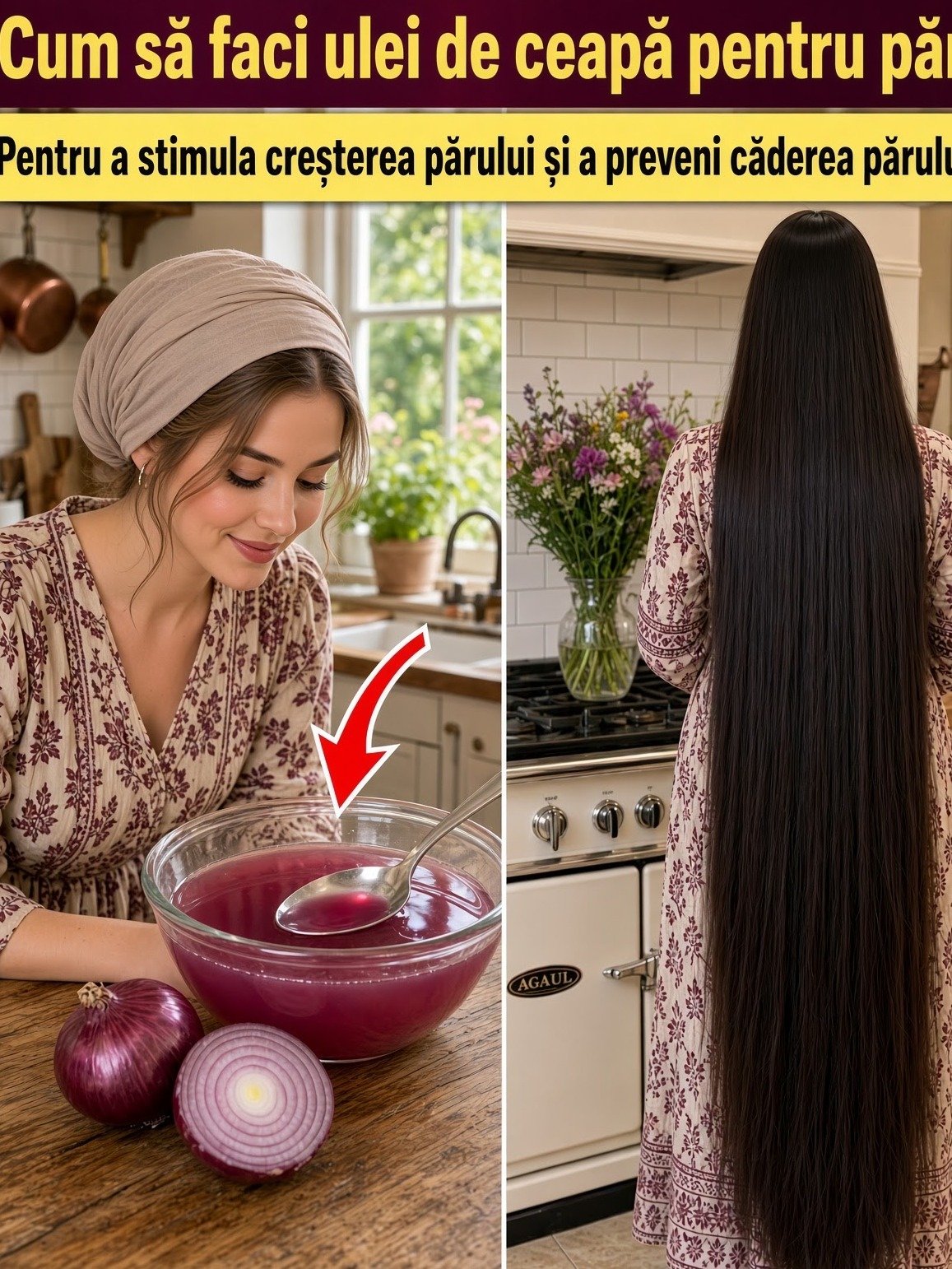
🔥 How can onion oil be prepared at home?
Some traditional recipes involve combining onions with a pure carrier vegetable oil.
If you choose to make a homemade version, be sure to avoid very high temperatures and burning the onion.
A simple method involves finely chopping a small amount of onion, adding it to a suitable oil, and then gently heating the mixture on a very low temperature. Stop heating before the onion begins to brown or burn.
Allow the preparation to cool completely, then carefully strain it into a clean container.
Homemade cosmetic preparations lack the same preservation systems and quality control as commercial products. For this reason, it’s safer to prepare small quantities, use clean utensils, and discard the mixture if you notice any unusual changes in smell, appearance, or texture.
⚠️ Test the product before applying to the entire scalp
Onions and other ingredients in a cosmetic preparation can potentially irritate sensitive skin.
Before your first extensive use, apply a small amount to a limited skin area and monitor the reaction carefully.
If you experience any burning, intense itching, swelling, pronounced redness, or a rash, wash the area immediately and do not continue use.
Never apply the preparation to broken, infected, or severely inflamed skin.
🌿 Should onion oil be left on overnight?
It’s generally not necessary.
There’s a common misconception that a cosmetic ingredient automatically becomes more effective the longer it stays on the skin. In the case of onion oil, prolonged contact might only result in a stronger odor, product buildup, or an increased risk of irritation for sensitive individuals.
A shorter application period, followed by thorough washing, is typically a gentler and equally effective approach.
🥗 Hair health also starts from your diet
External care is only one piece of the puzzle.
Maintaining normal hair health also depends on an adequate diet that provides essential nutrients like protein, iron, zinc, essential fatty acids, and other vital components.
A varied diet should include foods such as eggs, fish, beans, lentils, green leafy vegetables, nuts, seeds, whole grains, fruits, and vegetables.
Supplements are not automatically needed just because you’re experiencing hair shedding. Specifically, iron and high-dose supplements should never be taken without a clear reason or without the recommendation of a healthcare professional.
❗ When does hair loss warrant investigation?
The amount of hair shed can naturally vary, but certain changes definitely warrant evaluation by a dermatologist.
It is advisable to seek specialist advice if you observe sudden and excessive shedding, round patches of hair loss, visible scalp inflammation, persistent itching or flaking, scalp pain, progressive thinning at the crown or along the part line, or loss of eyebrows or eyelashes.
Additionally, hair loss that continues for several months without improvement merits investigation.
Identifying the underlying cause is far more beneficial than successively trying numerous cosmetic remedies without a clear diagnosis.
Frequently Asked Questions About Onion Oil
Can onion oil make hair regrow?
The available evidence does not definitively support the claim that onion oil reliably causes hair regeneration for all forms of hair loss. It may have a cosmetic role, but results vary significantly.
Can it reactivate ‘dormant’ follicles?
This claim is too strong. Follicle activity can be influenced by genetics, hormones, inflammation, scarring, and various medical conditions, and onion oil cannot reverse all these complex processes.
How often can it be used?
If your scalp tolerates it, using it once or twice a week may be sufficient for a cosmetic hair care routine.
Can it be left on overnight?
Generally, it’s not necessary. A shorter application period, followed by washing, is often more comfortable and equally effective.
Can it help hair that breaks easily?
The oily component can reduce dryness and friction, which may make hair strands easier to manage and limit some forms of mechanical breakage.
Can it replace hair loss treatment?
No. Onion oil should be viewed as a cosmetic care product, not as a substitute for medical evaluation or prescribed treatment for a diagnosed condition.
🌟 Conclusion: Gentle Care, Without Exaggerated Promises
Onion oil doesn’t need exaggerated claims like “reactivates follicles in a few days” to earn its place in a hair care routine.
Used in moderate amounts and if well-tolerated, it can effectively help to condition the scalp, reduce feelings of dryness, and keep hair strands softer and easier to comb.
However, these benefits are distinctly different from treating the underlying cause of persistent hair loss.
For a long-term approach to hair health, combine gentle scalp care with a varied diet, limit damage from heat and chemical treatments, and seek a specialist’s evaluation if thinning becomes noticeable, sudden, or persistent.
SEO Title
Onion Oil for Hair: Benefits, Scalp Care, Usage, and Precautions
Meta description
Can onion oil help thinning hair? Find out what effects it can have on your scalp and strands, how to use it safely, and when hair loss needs a professional check-up.
Suggested URL slug
onion-oil-for-hair-scalp-care
SEO Keywords
onion oil for hair, onion oil benefits, scalp care, thinning hair, hair breakage, hair loss, natural hair care, oil for scalp, dry hair, hair routine
Disclaimer: This article provides general informational purposes only and is not intended for diagnosing or treating hair loss or scalp conditions.