 By admin
 Do you often dismiss swollen ankles or persistent fatigue as “just the heat” or “getting older”? Many of us do, even as symptoms like sandal marks on our feet, rising blood pressure, and overwhelming tiredness start to steal our zest for life. It’s tough to admit, but often we continue with high-sodium diets, inadequate hydration, or trust unverified online remedies without truly understanding what’s going on. The good news is that simple daily habits and common foods can genuinely support healthy kidney function and enhance your overall well-being. We’ll also uncover a common “healthy” mistake many people, especially older adults, make without realizing it.
What Signals Should You Never Ignore?
Your kidneys are vital filters, removing waste and maintaining fluid and mineral balance in your body. When they struggle, you might notice signs like swelling in your feet or ankles, persistent fatigue, changes in urination, or elevated blood pressure. Early stages often lack clear symptoms, which is why many overlook them. But here’s the crucial point: not all swelling indicates kidney problems, and not every “homemade juice” is a good idea. Some popular ingredients might be unsuitable for everyone, especially if you have existing kidney disease or if your doctor has advised fluid, sodium, or potassium restrictions.
Warning Signs That Require Medical Consultation:
- Persistent swelling in ankles, feet, or face.
- Frequently elevated blood pressure.
- Foamy urine or significant changes in urination patterns.
- Fatigue that doesn’t improve with rest.
- Shortness of breath, nausea, or loss of appetite.
These symptoms can be linked to various health issues and warrant professional medical evaluation.
The Pitfalls of “Miracle Cures” for Kidney Cleansing:
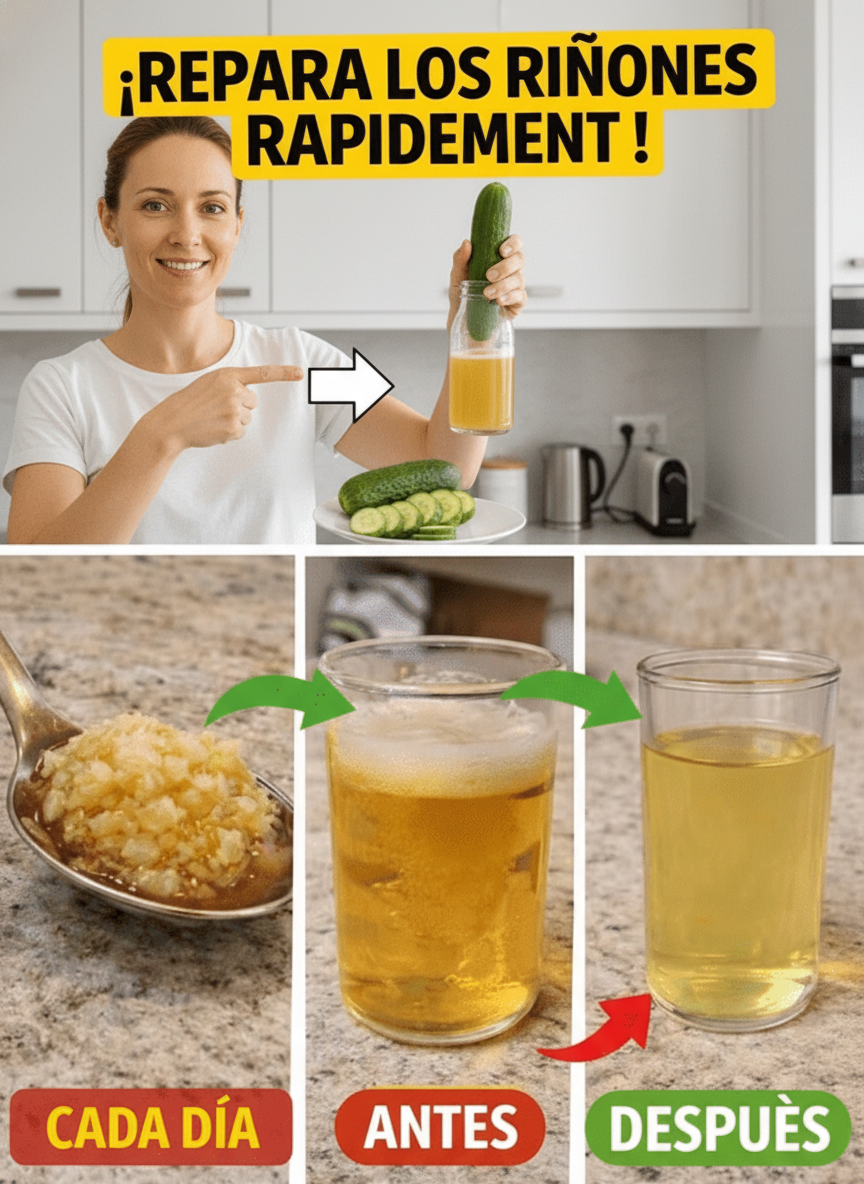
Social media is rife with compelling “before and after” images and promises like “repair your kidneys quickly.” While enticing, such claims are unreliable and irresponsible. Kidneys don’t “unclog” overnight with a single drink. What genuinely helps, according to general medical recommendations, is maintaining a balanced diet, moderating salt intake, monitoring blood pressure, staying active, and following personalized advice if you have kidney disease. This shifts the focus from exaggerated remedies to sustainable habits that truly make a difference.
Foods That Can Support Normal Kidney Function:
These aren’t magic foods, but options that, as part of a balanced diet, can help reduce common excesses that burden the body.
- Cucumber and High-Water Vegetables: Cucumber can be a light, refreshing addition to your diet. For individuals without fluid restrictions, water-rich foods contribute to proper hydration, helping the body maintain healthy urine levels.
- Fresh, Low-Sodium Fruits and Vegetables: A diet rich in fresh produce typically contains less sodium than ultra-processed foods. Reducing sodium intake is crucial for better blood pressure control, which is vital for both kidney and cardiovascular health.
- Garlic, Onion, Lemon, and Herbs for Flavor: This small tip is invaluable. By replacing salty bouillon cubes, processed seasonings, and packaged snacks with garlic, onion, parsley, oregano, or lemon, you naturally reduce your sodium load without sacrificing flavor. The National Kidney Foundation recommends using herbs and spices to cook with less salt.
- Plain Water, When Permitted: Many believe “the more water, the better.” This isn’t always true. While water is essential for bodily balance and waste elimination, excessive fluid intake can be harmful for some individuals with advanced kidney disease or heart failure. Therefore, the ideal amount should be tailored to each person’s specific needs.
The Habits That Often Harm Silently:
Often, it’s not a single “bad” food but rather daily habits that gradually take a toll. This includes consistently high sodium intake, neglecting proper hydration (or over-hydrating when advised against), and ignoring early warning signs. Many, especially older adults, might mistakenly believe certain “healthy” practices are universally beneficial without considering their individual health status or potential interactions with medications. Always consult a healthcare professional for personalized advice regarding diet and hydration, particularly if you have underlying health conditions.