 By admin
 Metoprolol Side Effects: Unexpected Symptoms You Shouldn’t Ignore
Imagine this: You’re taking Metoprolol daily, expecting it to manage your heart health. But then, you start feeling dizzy when standing up, unusually tired, or experiencing unexplained leg pain. Many people, especially older adults, dismiss these symptoms as “just part of aging.” What if they’re not? What if your medication is playing a role?
The surprising truth is that many individuals overlook Metoprolol’s side effects until they become significantly disruptive. This article will guide you through 10 common, yet often surprising, side effects of Metoprolol, how to recognize them, and simple steps you can take to protect your well-being without complications.
1. Fatigue and Constant Tiredness
One of the most frequently reported side effects, Metoprolol can leave you feeling drained. Unlike normal tiredness, this fatigue can be persistent and impact daily activities.
- How it manifests: Feeling exhausted after routine tasks, difficulty getting out of bed, daytime sleepiness.
- What to know: While you might have had stable energy before Metoprolol, you might now feel tired after just a short walk. Sleep may feel less refreshing.
Note: Fatigue can be more pronounced if Metoprolol is combined with other blood pressure medications.
2. Dizziness and Vertigo Upon Standing
This is a common effect that many older adults tend to overlook. Metoprolol can cause a sudden drop in blood pressure when changing positions, leading to instability or lightheadedness.
- Practical Tips:
- Rise slowly from beds or chairs.
- Ensure your room is well-lit to prevent falls.
- Consider taking your dose after breakfast (consult your doctor first).
3. Slower-Than-Expected Heart Rate (Bradycardia)
Metoprolol’s purpose is to decrease heart rate, which can be beneficial, but an excessively slow rate can lead to problems.
- Symptoms to watch for: Very slow pulse (<50 beats/min), unexplained fatigue or weakness, frequent dizziness.
⚠️ Important: If you notice these symptoms, do NOT adjust your dosage on your own. Speak with your doctor immediately.
4. Mild Respiratory Issues
Some patients may experience shortness of breath, a persistent cough, or a sensation of chest tightness. This is more frequent in individuals with a history of asthma or COPD.
- Recommendation: Keep a record of any respiratory symptoms and consult your doctor if they worsen.
5. Cold Hands and Feet
Metoprolol can affect peripheral circulation, potentially causing:
- Cold or numb fingers and toes.
- Pale skin or a tingling sensation.
Home Solutions: Gently massage your extremities, wear warm socks and gloves, and avoid very cold temperatures without protection.
6. Leg Pain or Cramps
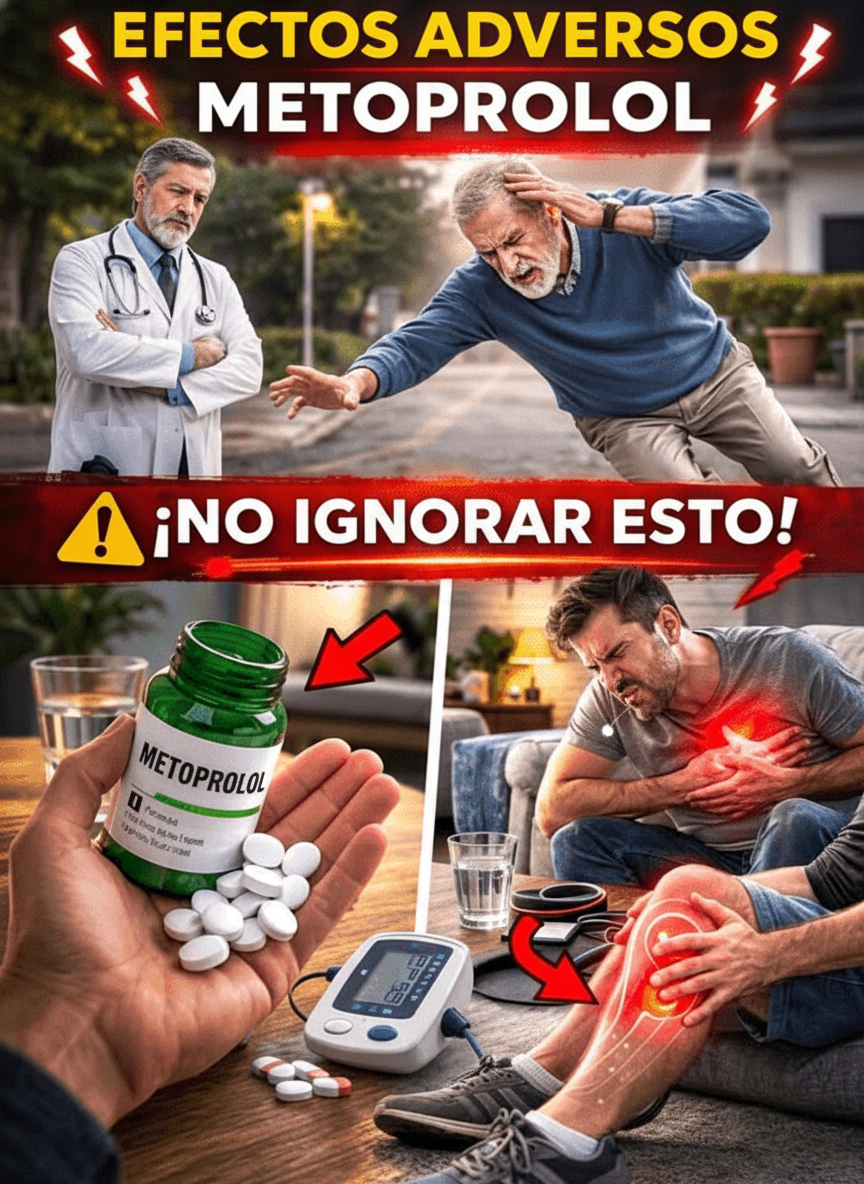
Prolonged use may reduce blood flow to muscles, leading to pain or cramps, especially after walking or climbing stairs.
- Quick Tip: Gentle stretching before and after physical activity, and adequate hydration. Consult your doctor if cramps are frequent or intense.
7. Digestive Problems
Some individuals may experience:
- Mild nausea.
- Occasional diarrhea or constipation.
- Loss of appetite.
Suggestion: Eating small, frequent meals may help minimize these discomforts.
8. Mood Changes
Metoprolol can influence the nervous system, potentially causing:
- Mild anxiety or irritability.
- Feelings of sadness without a clear reason.
What to do: Maintain open communication with your family and doctor, and track any emotional changes.
9. Dizziness During Exercise
The combination of lower blood pressure and bradycardia (slow heart rate) can lead to lightheadedness or a fainting sensation during physical activity.
- Recommendations:
- Start with gentle exercises.
- Avoid intense exertion without supervision.
- Monitor your blood pressure before and after activity.
10. Sleep Disturbances
Some adults report insomnia or interrupted sleep, which can exacerbate fatigue and impact overall well-being.
- Tips for better sleep:
- Establish a stable nightly routine (go to bed and wake up at the same time).
- Avoid caffeinated beverages after noon.
- Ensure your bedroom is dark and well-ventilated.
Practical Advice to Minimize Risks
Being proactive and observant can significantly impact your daily well-being while taking Metoprolol:
- Keep a daily log of your symptoms and blood pressure readings.
- Never adjust your dosage on your own.
- Communicate any new or intense symptoms to your doctor promptly.
- Adjust your daily routine to minimize dizziness and prevent falls.
- Engage in moderate physical activity tailored to your condition.
Understanding these potential side effects and working closely with your healthcare provider is crucial for safely managing your health and improving your quality of life.