 By admin
High Cholesterol? The Misleading Signs and the Crucial Habit You Can’t Afford to Postpone
It happens more often than you think: you feel winded climbing a few stairs, experience a strange chest sensation, or a slight dizzy spell, and you brush it off as “just age.” You shrug, move on with your day, but a nagging worry lingers. The truth is, many people confuse common discomforts with “cholesterol symptoms,” inadvertently delaying vital health actions.
The good news? There’s a sensible way to take charge of your health today. By the end of this article, we’ll reveal the most commonly postponed step that can make all the difference.
The Silent Threat: High Cholesterol Rarely Shows Clear Symptoms
Here’s the plain truth: high cholesterol, on its own, generally doesn’t cause obvious signs. Leading health organizations like the CDC, NHLBI, and MedlinePlus explicitly state that most individuals experience no symptoms and only discover high cholesterol through a blood test.
This is a critical takeaway: if you’ve seen images or posts claiming that high cholesterol “manifests” with dizziness, dry mouth, cold sweats, or headaches, it’s wise to approach that information with extreme caution. While some of these discomforts might have other underlying causes, and others could be linked to heart problems or blood sugar issues, they are not direct indicators of high cholesterol itself.
However, that’s not the whole story. While high cholesterol typically isn’t “felt,” over time, it can contribute to the formation of plaque in your arteries. When this process significantly affects blood circulation, then symptoms of cardiovascular disease, such as chest pain or pressure, may emerge.
Why the Confusion? Deciphering Common Discomforts
It’s human nature to seek an immediate explanation for any discomfort. If someone experiences fatigue, blurred vision, or dizziness, it’s easy to jump to conclusions about cholesterol. The challenge is that these symptoms are very general and can stem from numerous other conditions. In reality, many discomforts people attribute to high cholesterol can be related to:
- Dehydration
- Stress or anxiety
- High or low blood pressure
- Elevated blood glucose
- Medication side effects
- Inner ear problems
- Lack of sleep
In essence, feeling something doesn’t confirm high cholesterol. And, crucially, feeling nothing doesn’t mean everything is fine. That’s the deceptive trap.
Common Discomforts Often Mistaken for High Cholesterol
Chest Pain
Chest pain or pressure warrants immediate attention, but it shouldn’t be automatically assumed to be “high cholesterol.” Mayo Clinic explains that chest pain can occur with coronary artery disease or angina, indicating that blood flow to the heart is already compromised.
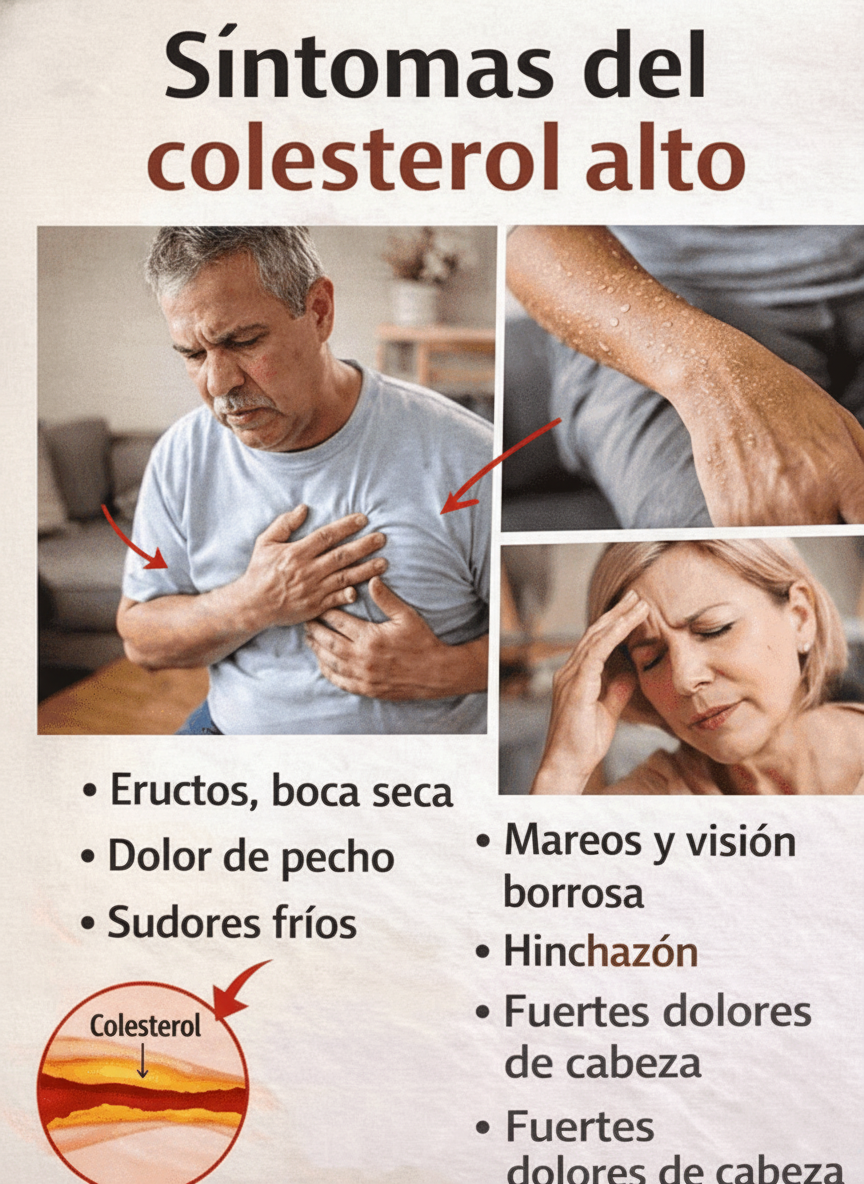
Dizziness or Blurred Vision
These symptoms can arise from a multitude of reasons. The NHLBI notes that blurred vision can be linked to high blood sugar, not directly high cholesterol.
Cold Sweats
Cold sweats can accompany anxiety, intense pain, or even acute cardiac events. If cold sweats appear alongside chest pain, shortness of breath, or nausea, don’t guess – seek immediate medical attention.
Dry Mouth or Burping
These discomforts are typically more associated with reflux, digestion issues, anxiety, medications, or insufficient hydration than with high cholesterol.
Quick Glance: Myth vs. Reality
| What People Say | What is Actually Known |
|---|---|
| “High cholesterol always causes symptoms.” | In most cases, it causes no symptoms and is detected by blood tests. |
| “If I’m dizzy, I must have high cholesterol.” | Dizziness has many causes and doesn’t confirm high cholesterol. |
| “If I feel fine, my cholesterol is normal.” | Many people with high cholesterol feel perfectly normal. |
| “Chest pain means high cholesterol.” | It can be a sign of a serious heart problem and requires medical evaluation. |
| “Only overweight people suffer from it.” | Genetics, age, diet, sedentary lifestyle, and other factors also play a role. |
The Signals That Demand Immediate Attention
Now, for the serious part. While high cholesterol itself doesn’t usually present with specific symptoms, there are critical signs you should never ignore, as they could indicate an urgent cardiovascular problem:
- Pain, tightness, or heaviness in the chest
- Sudden shortness of breath
- Cold sweats accompanied by intense discomfort
- Pain radiating to the arm, neck, back, or jaw
- Sudden weakness, difficulty speaking, or confusion
If any of these symptoms appear, especially in combination, it is prudent to seek immediate medical attention. The Mayo Clinic and CDC warn that persistent chest pain or pain associated with other symptoms could indicate a serious medical emergency.
The Crucial Habit You Can’t Afford to Postpone
Given that high cholesterol is often silent until it leads to serious complications, the single most important habit you shouldn’t postpone is **regular health check-ups, including blood tests to measure your cholesterol levels.**
This proactive step is your most effective tool for early detection and management. By knowing your numbers, you and your doctor can implement lifestyle changes or medical treatments to keep your cholesterol in check, significantly reducing your risk of heart disease and stroke. Don’t wait for misleading symptoms; take control of your health today with consistent monitoring.