 By admin
 Do These 3 Leaves Really Support Your Liver and Bile? What You *Must* Know Before Taking Them
Many people spend years indulging in heavy meals, late-night dinners, and dismissing digestive discomfort after eating. Eventually, they experience inflammation, a bitter taste in their mouth, or a heavy feeling on their right side, often feeling embarrassed to admit their routine is taking a toll. Worse still, out of shame or trust in viral remedies, many rush to prepare herbal teas without understanding if they are truly beneficial.
The good news is that traditional leaves can indeed be part of a wellness routine. However, there’s a crucial piece of information almost no one explains, and by the end of this article, you’ll understand why not all natural remedies are created equal.
The Liver and Bile Don’t “Cleanse” Themselves as Social Media Claims
In many places, countless videos circulate promising to “cleanse the liver” in just a few days. This sounds appealing, especially when someone feels inflamed, tired, or suffers from heavy digestion. But the reality is different.
The liver already has the natural function of processing substances, aiding digestion, and supporting many bodily processes. Bile, for its part, helps digest fats. Therefore, rather than talking about “cleansing,” it’s more accurate to discuss habits that support their daily function.
Health organizations and scientific reviews agree that liver care depends much more on factors like alcohol consumption, body weight, overall diet, and the responsible use of medications or supplements than on a miraculous drink. And here’s the important part: some leaves used in traditional infusions can provide interesting compounds, but that doesn’t mean they are suitable for everyone or should be consumed in large quantities.
The 3 Most Mentioned Leaves: Oregano, Bay Leaf, and Guava
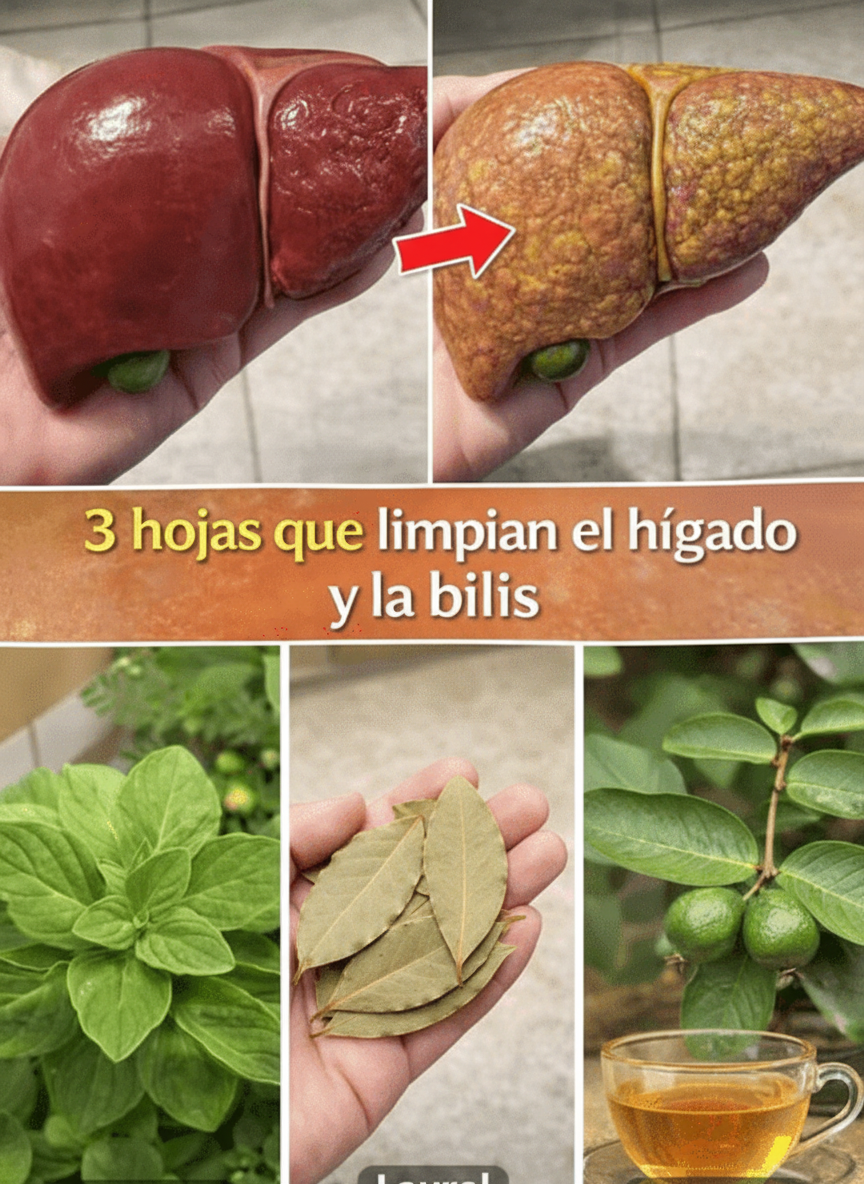
The viral image mentions three leaves very popular in home remedies. Let’s review them calmly, without exaggeration or fear.
Oregano
Oregano is highly valued in many cuisines and traditional herbal medicine. It contains aromatic compounds and antioxidants that have sparked scientific interest. However, using it as part of a meal is very different from taking concentrated extracts, oils, or teas, believing they will “detoxify” the body.
The National Center for Complementary and Integrative Health (NCCIH) in the United States notes that for several popular applications of oregano oil, there isn’t solid evidence to support clear benefits. This doesn’t mean oregano is bad; it means it’s best viewed as a supportive element within a balanced diet, not a primary solution.
Bay Leaf
Bay leaf is another culinary classic. In culinary quantities, it is generally considered safe. However, when used as a frequent infusion or in highly concentrated preparations, the conversation changes. Some references indicate that bay leaf may interfere with glucose control, and there isn’t enough information to recommend its widespread use during stages like pregnancy or lactation.
Furthermore, a recent clinical report even highlighted potential liver damage associated with excessive consumption of bay leaf tea, though this was a single case and not a general rule. Simply put, bay leaf in your soup is not the same as bay leaf as a daily habit in a concentrated infusion.
Guava Leaves
Guava leaves have been studied for their content of plant compounds like flavonoids and antioxidants. Some reviews describe interesting potential in various areas, but most of the evidence still lies between experimental studies, reviews, and traditional uses, not as a universal recommendation to “cleanse” the liver or gallbladder.
That said, in many homes, they are used for mild infusions, especially when seeking a simple herbal drink. The key is not to turn a traditional custom into an exaggerated promise.
So, Are They Useful or Not?
The honest answer is this: they can be part of a digestive wellness routine for some individuals, but there is no serious basis to claim that these three leaves alone “cleanse the liver and bile.” And here lies the most common mistake.
Many people want to compensate with a cup of tea for years of poor eating habits, alcohol consumption, overweight, self-medication, or a sedentary lifestyle. That’s where they lose their way. The truth is simpler and more useful: a mild infusion can accompany a liver-friendly lifestyle, but it doesn’t replace fundamental habits.