 By admin
 Many people experience the same thing: stretching their arm to read their phone, increasing screen brightness, squinting at the newspaper, and still thinking it’s “normal for their age.” The uncomfortable truth is that, little by little, these small signals become part of the routine, and we stop paying attention to them.
The good news is that simple changes in diet and daily habits can support eye care. And by the end, I’ll reveal a detail almost no one considers when talking about seeds and vision health.
Why So Many Older Adults Notice Vision Changes Without Realizing It
As we age, our vision changes. This doesn’t mean resigning yourself or believing every promise that appears on social media. The truth is simpler and more useful: our eyes also depend on what we eat, how we rest, the light we expose ourselves to, and whether we address timely signals that we often minimize.
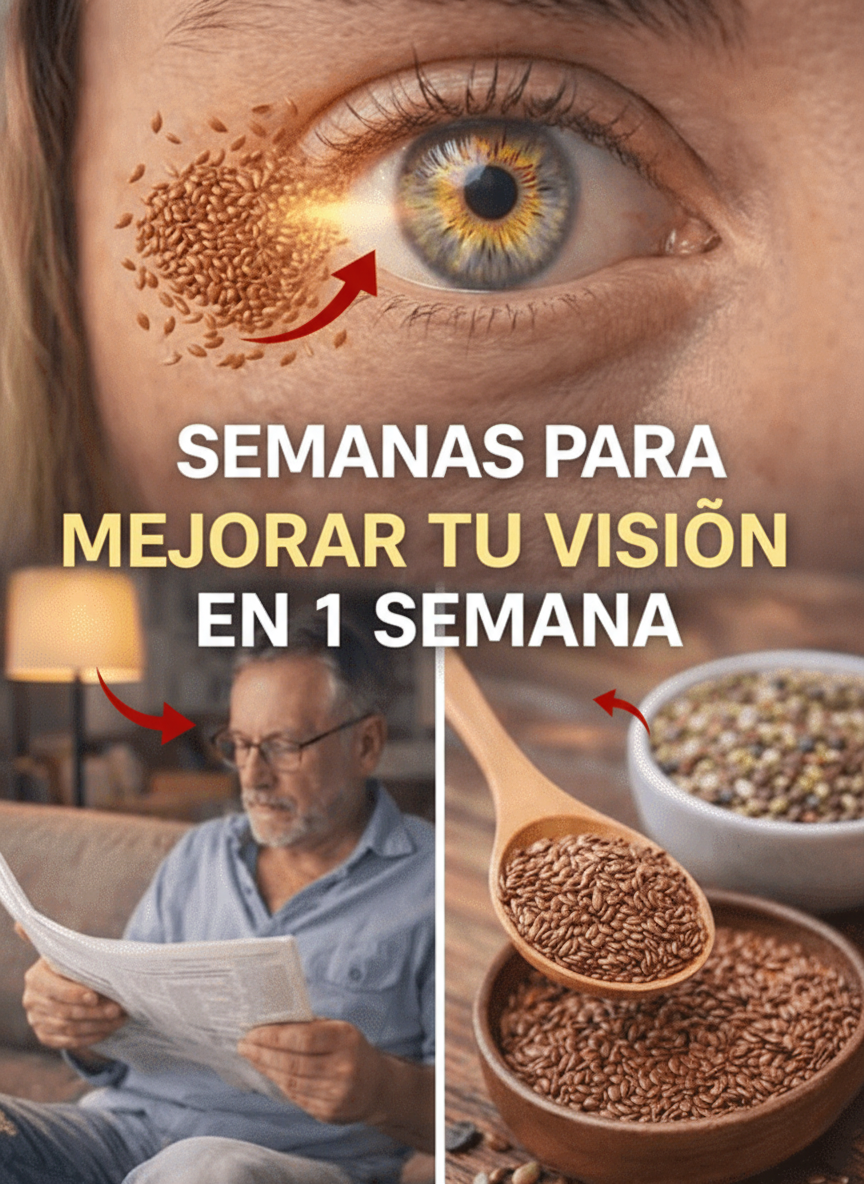
And here’s the important part: there’s no magic seed that will “improve vision in a week.” Those kinds of phrases sound appealing but aren’t reliable guidance. What can help is maintaining a varied diet with nutrients linked to ocular health, alongside consistent habits.
Organizations and vision health specialists point out that certain nutrients, such as Vitamin E, zinc, lutein, zeaxanthin, and omega-3, are part of serious discussions about nutrition and eyes.
3 Seeds That Can Be Part of a Kinder Routine for Your Eyes
1) Flaxseed
Flaxseed is often recommended for its contribution of healthy fats, especially ALA, a type of plant-based omega-3. Does that mean it will single-handedly restore perfect vision? No. But it can be a good addition to a balanced diet, especially if you use it as part of a diet rich in fruits, vegetables, legumes, and healthy fats. Furthermore, the American Academy of Ophthalmology mentions flaxseed among dietary sources related to omega-3 in the context of eye health.
How to include it practically:
- 1 tablespoon ground in oatmeal
- Mixed into natural yogurt
- Added to smoothies without excessive sugar
- Sprinkled over chopped fruit
2) Sunflower Seeds
Here’s one of the most interesting for this topic. Sunflower seeds are a known source of Vitamin E, and Vitamin E frequently appears in reference materials on ocular nutrition. The American Academy of Ophthalmology precisely mentions sunflower seeds as a healthy source of this vitamin. Vitamin E acts as an antioxidant, meaning it helps protect cells against oxidative stress. This doesn’t equate to promising miraculous results, but it does explain why these seeds can have a reasonable place in a diet geared towards general well-being.
A simple way to consume them:
- A small handful as a snack
- On top of salads
- Mixed with cucumber, jicama, or fruit (without excessive salt)
- Along with nuts, minding the portion
3) Pumpkin Seeds
Pumpkin seeds often attract attention for their mineral content, including zinc. And here’s a key fact: zinc appears in research and NIH materials on certain formulas studied for age-related macular degeneration, though this doesn’t mean anyone should self-medicate with supplements. In food, pumpkin seeds can be a practical way to add zinc to your daily diet, within a complete eating pattern.
Ideas for eating them without complications:
- Toasted, without excessive salt
- As a topping on vegetable soup
- In a salad with tomato and avocado
- Mixed with oatmeal or homemade granola
What These Seeds Do and Don’t Do
This point deserves total clarity, especially if the article is for older adults who are already tired of exaggerated promises. It’s crucial to distinguish between realistic benefits and misleading claims:
- Regarding seeds and vision: They can provide useful nutrients within a balanced diet. They do not cure visual problems.
- Regarding time to effect: Habits show results with consistency, not overnight. Don’t expect changes in a week.
- Regarding correct use: They are part of a healthy routine. They do not substitute medical check-ups or corrective lenses.
- Regarding realistic outcomes: They support general well-being and nutrition. They do not eliminate diseases.
The truth is, many people don’t fail due to lack of interest, but by believing that a single food will compensate for years of poor habits. And it doesn’t work that way. The real secret: it’s not just about the seed; it’s about the entire dietary pattern and lifestyle it’s part of.