 By admin
Introduction
Reaching the age of 60 brings new health challenges, and your stroke risk naturally climbs during these years. However, many people are unaware that mini strokes (scientifically known as TIAs or transient ischemic attacks) often arrive silently, masked by subtle symptoms that are easy to overlook.
Dismissing these early indicators is a dangerous gamble. In reality, a mini stroke acts as a critical warning alarm, signaling that a life-altering major stroke could be looming on the horizon.
Learning to identify these nuances now could save your life—or the life of someone you love.
What Is a Mini Stroke (TIA)?
A mini stroke occurs when the brain’s oxygen supply is momentarily interrupted by a blockage. Unlike a full-blown stroke, the symptoms may vanish in minutes or mere hours, creating a false sense of security that everything is fine.
Do not be fooled; a TIA is frequently a harbinger of a major stroke, which can follow in just a matter of days.
10 Silent Mini Stroke Symptoms You Should Never Ignore
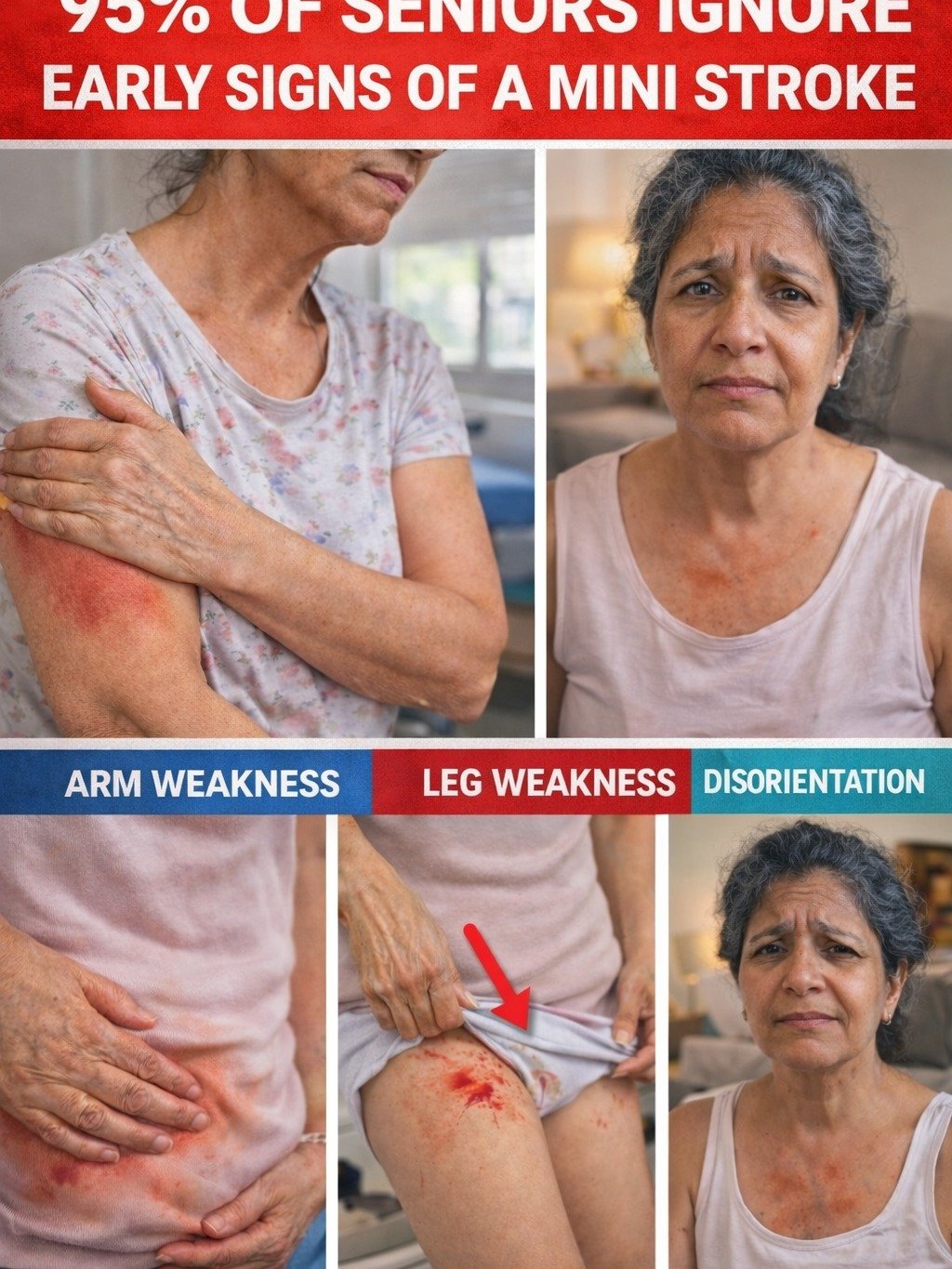
1. Sudden Numbness or Weakness
You might experience a strange sensation of weakness or tingling in:
- Your face
- Your arm
- Your leg (typically affecting only one side of the body)
Even if the feeling passes quickly, it is never something to take lightly.
2. Trouble Speaking or Slurred Speech
When your speech becomes garbled or you find it difficult to grasp what others are saying, it’s a red alert.
Watch for these signs:
- Struggling to articulate specific words
- Slurring your speech
- Feeling suddenly lost or confused during a conversation
3. Temporary Vision Problems
Mini strokes can disrupt your visual perception, often manifesting as:
- Sudden blurring
- Seeing double
- A complete or partial loss of vision in one or both eyes
4. Dizziness or Loss of Balance
If you experience a sudden loss of equilibrium, unexplained dizziness, or unsteadiness while walking, it could indicate that your brain’s blood flow is being compromised.
5. Sudden Severe Headache
An intense, sudden-onset headache that appears without any obvious trigger is a major warning symptom that deserves immediate medical scrutiny.
6. Confusion or Difficulty Understanding
You may feel mentally foggy, disoriented, or suddenly unable to process simple information or follow instructions.
7. Brief Loss of Coordination
Simple, everyday motor tasks can become surprisingly difficult during a TIA, including:
- Gripping or holding objects
- Walking in a straight line
- Executing basic physical movements
8. Facial Drooping
Check your reflection; if one side of your face begins to sag or looks asymmetrical when you attempt to smile, this is a hallmark stroke indicator.
Treat this as a medical emergency requiring urgent attention.
9. Sudden Fatigue or Weakness
An abrupt, overwhelming sense of exhaustion or physical weakness that hits out of nowhere can be a direct symptom of reduced blood flow to the brain.
10. Short Episodes That Disappear Quickly
The most deceptive part of a mini stroke is its fleeting nature:
- Symptoms often last only a few moments
- They frequently resolve completely on their own
This transient nature causes many people to shrug it off, but these episodes must never be ignored.
Why You Should Act Immediately
Even if your symptoms vanish within minutes, a mini stroke is a medical emergency. Research indicates that the danger of experiencing a major, permanent stroke is highest within 48 hours following a TIA.
If you notice any of these signs, seek professional medical care without delay.
Who Is at Higher Risk?
Your risk factors increase significantly if you:
- Are age 60 or older
- Suffer from hypertension (high blood pressure)
- Have diabetes
- Are a smoker
- Have elevated cholesterol levels
- Lead a mostly inactive or sedentary lifestyle
How to Reduce Your Stroke Risk
Maintain a Healthy Lifestyle
- Prioritize a heart-healthy, balanced diet
- Commit to regular physical activity
- Maintain a healthy body weight
Manage Medical Conditions
Work closely with your doctor to keep blood pressure, diabetes, and cholesterol levels within safe, managed ranges.
Avoid Smoking and Limit Alcohol
Eliminating these harmful habits can substantially lower your overall risk of stroke.
Conclusion
Though mini strokes may be short-lived, their potential consequences are severe. Being vigilant about these 10 silent warning signs is the best way to protect your health before a larger crisis occurs.
If you or a loved one encounters these symptoms, do not hesitate—seek emergency medical help immediately.