 By admin
 Imagine if a common ‘weed’ in your backyard held a surprising secret against one of the world’s most feared diseases. Cancer continues to be a global health crisis, impacting millions and bringing immense physical and emotional challenges to patients and their loved ones every year. While conventional treatments are vital, many individuals explore natural avenues for additional support, and one unassuming plant, dandelion (Taraxacum officinale), has captured significant scientific attention for its intriguing potential.
In this comprehensive article, we’ll delve into the current scientific understanding of dandelion root in an accessible and balanced way. Stick around until the end, where I’ll share a simple tea recipe – but remember, this is always to be considered with caution and under the guidance of a medical professional.
🌿 What Makes Dandelion So Special and Why Is Everyone Talking About It?
The dandelion, that familiar little plant with bright yellow blossoms that later transform into whimsical white ‘puffballs’ scattering seeds on the breeze, is often dismissed as a mere garden nuisance. Yet, for centuries, traditional medicine has revered it for its role in supporting digestion, enhancing liver function, and acting as a gentle natural diuretic.
It’s a nutritional powerhouse, packed with essential vitamins A, C, and K, alongside vital minerals like potassium and iron, and a rich supply of antioxidants. In recent years, scientists have focused intensely on the root of this plant, uncovering compounds that could play a role in helping the body maintain healthy cellular balance.
🔬 Unpacking the Science: Dandelion Root and Its Interaction with Cancer Cells
Groundbreaking Laboratory Studies (in vitro)
In controlled laboratory settings, using isolated cells, extracts derived from dandelion root have demonstrated a remarkable ability to trigger programmed cell death, known as apoptosis, in specific types of cancer cells. This includes promising results against colon cancer, melanoma, and leukemia cells. What’s particularly noteworthy is that some of these experiments indicated a significantly reduced impact on healthy cells.
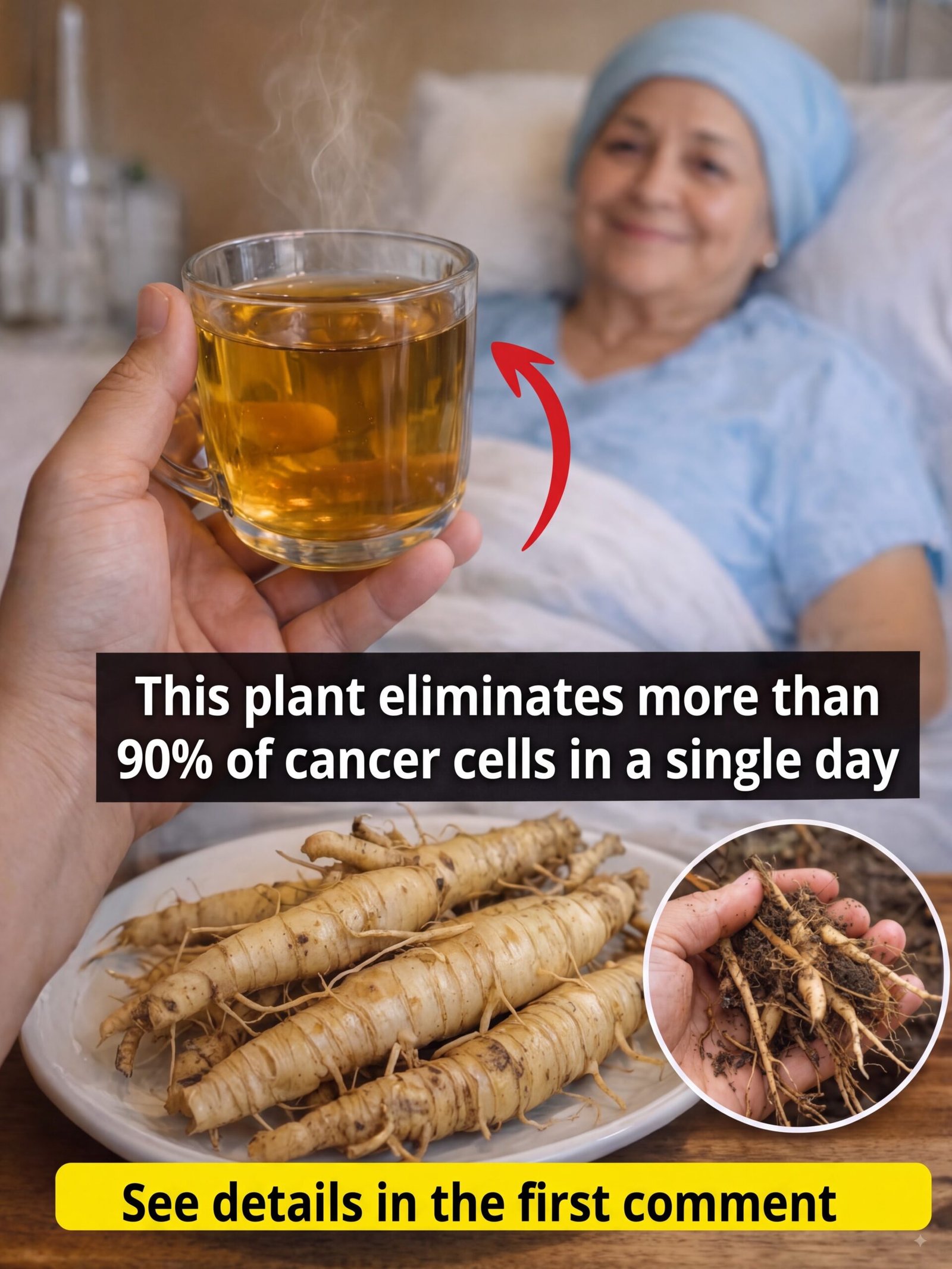
📌 Key Research Highlight: A compelling study from the University of Windsor in Canada, featured in the esteemed journal Oncotarget, reported that an aqueous extract from dandelion root influenced over 90% of colorectal cancer cells under laboratory conditions within approximately 48 hours, engaging multiple pathways crucial for cell demise.
Insights from Animal Studies
Moving beyond petri dishes, initial investigations in animal models have suggested that dandelion extracts possess the potential to impede the growth of certain tumors. However, it’s crucial to understand that these findings represent early-stage research.
Crucial Disclaimer: It’s absolutely vital to remember that positive outcomes in laboratory or animal studies do not translate directly into proven treatments or cures for cancer in human beings.
🌱 Beyond Cancer Research: Dandelion’s Other Remarkable Benefits
Historically, dandelion has been a cornerstone in traditional remedies for various purposes, including:
- Providing support for liver health and encouraging the body’s natural detoxification processes.
- Delivering powerful antioxidant compounds that actively help to neutralize oxidative stress.
- Offering a gentle diuretic effect, assisting with fluid balance.
- Supporting the body’s inherent inflammatory response for overall wellness.
A Quick Look: Dandelion Compared to Other Popular Plants
| Plant | Potential Main Benefit | Key Compounds |
|---|---|---|
| Dandelion | Cellular and digestive support | Vitamins A, C, K |
| Turmeric | Anti-inflammatory support | Curcumin |
| Ginger | Digestive comfort | Gingerols |
🍵 Your Guide to Crafting a Simple Dandelion Root Tea
What You’ll Need — For 1 Cup
- 1–2 teaspoons of dried dandelion root
- 1 cup of fresh water
- A hint of honey, if you prefer a touch of sweetness
The Preparation Steps
- Bring your cup of water to a rolling boil.
- Carefully add the dried dandelion root to the boiling water.
- Reduce heat and allow it to simmer gently for 5–10 minutes.
- Strain the tea into your mug and serve immediately.
- Stir in a small amount of honey if you desire.
Many individuals incorporate 1–2 cups per day of this tea into their balanced lifestyle. However, it’s essential to understand that there is no scientifically established dosage for cancer treatment, and this tea should never be considered a substitute for medical cancer therapies.
⚠️ Essential Precautions You MUST Know
It’s crucial to be aware that dandelion can potentially interact with certain medications, particularly some diuretics and anticoagulants.
Always exercise caution or seek immediate professional medical advice if any of the following apply to you:
- You have a known allergy to plants belonging to the Asteraceae family, which includes common flowers like daisies.
- You are currently pregnant or breastfeeding.
- You are managing an existing medical condition.
- You take any prescription medications on a regular basis.
- You are undergoing active cancer treatment.
❓ Your Most Pressing Questions Answered
Can dandelion root truly cure cancer?
Absolutely not. At present, there is no credible clinical evidence from human trials to suggest that dandelion root can effectively treat or cure cancer. All existing research remains predominantly in the laboratory and preclinical stages.
Is it safe to drink dandelion tea daily?
For many healthy adults, consuming moderate amounts of dandelion tea may be well-tolerated. However, individual reactions can vary significantly. If you are on medication or have any underlying medical conditions, it is imperative to consult with a healthcare professional before incorporating it into your daily routine.
Where can I source dandelion root?
You can typically find dried dandelion root and various herbal products at well-stocked health-food stores, specialized herbal shops, and through reputable online retailers. Always prioritize products from trusted sources and adhere strictly to their recommended usage guidelines.
🌼 The Bottom Line
Dandelion is undeniably a fascinating plant, cherished for generations in traditional medicine and now under intense scientific scrutiny for its intriguing biological effects and potential health benefits.
However, the sensational “48-hour” cancer claim originates solely from laboratory research, not from any clinical evidence involving human subjects. While these preliminary findings are certainly exciting, they must not be misconstrued as proof that dandelion root can cure, eliminate, or replace conventional cancer treatments.
If you or a loved one are facing a cancer diagnosis, it is absolutely critical not to substitute established medical treatments like chemotherapy, radiation, surgery, or immunotherapy with herbal remedies. Always engage in an open discussion with your healthcare team about any herbs or supplements you are considering before incorporating them into your regimen.
This article is provided for informational and educational purposes only and should never be considered a substitute for professional medical advice. 🌿