 By admin
 Are you tired of those persistent, unwelcome bumps appearing on your skin, causing endless frustration and self-consciousness? You’re not alone. Warts, those common yet annoying skin growths, affect millions, from children to adults. While generally harmless, their rough texture, visible placement, or stubborn refusal to disappear can lead to significant discomfort and annoyance.
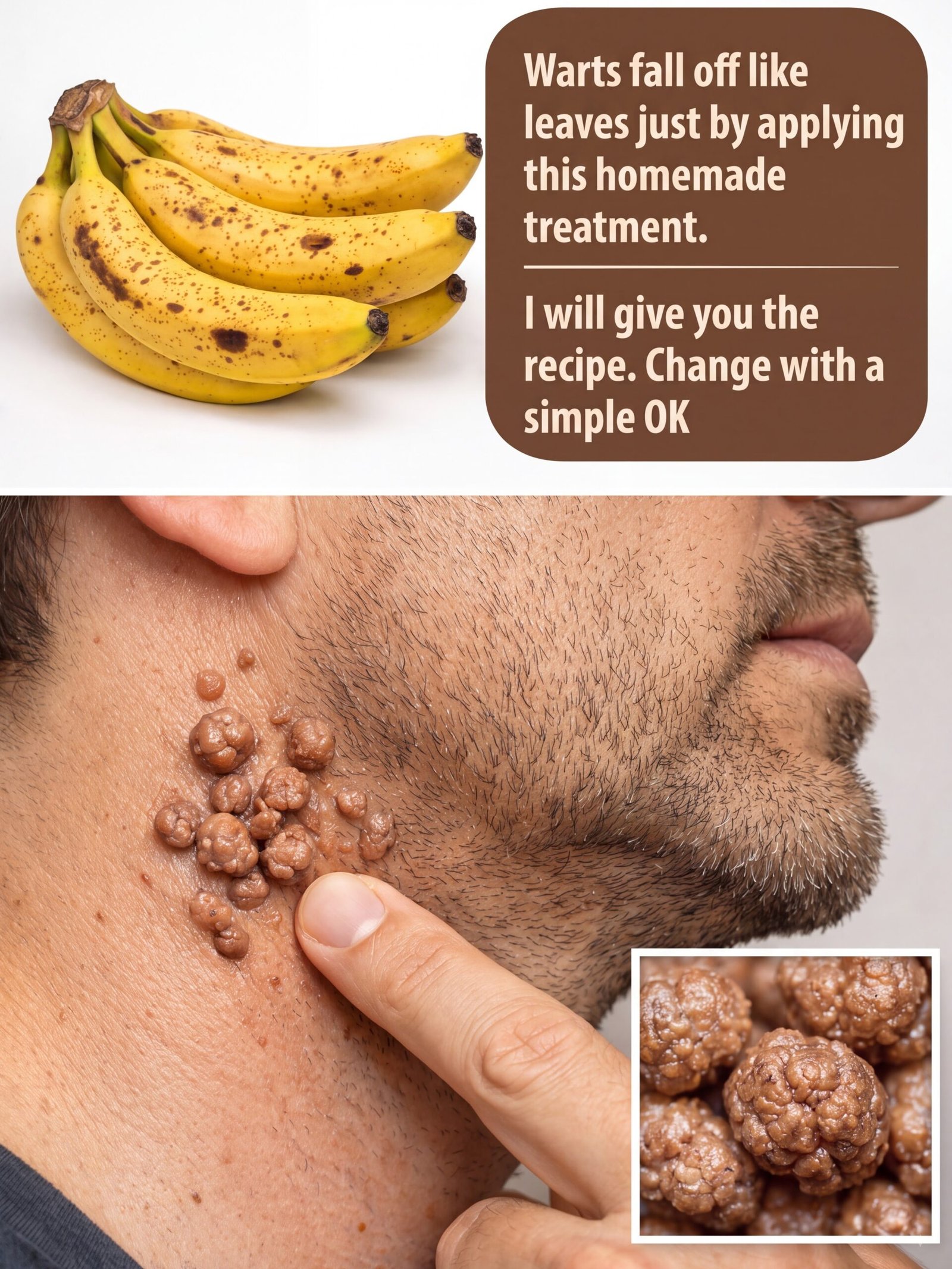
Driven by the desire for a quick fix, countless individuals explore natural, at-home methods to eliminate these pesky growths. Among the myriad of traditional solutions, the banana peel stands out as an exceptionally popular folk remedy, frequently touted alongside other household items like apple cider vinegar, garlic, castor oil, or baking soda.
Yet, it’s crucial to understand the vast difference between a time-honored traditional remedy and a scientifically validated medical treatment. Currently, robust, high-quality clinical research is lacking to definitively prove that banana peel is a reliable method for wart removal. Furthermore, certain DIY approaches can potentially cause irritation or even harm to your healthy skin.
In this comprehensive guide, we’ll demystify what warts are, uncover their origins, delve into the claims surrounding banana peel, and, most importantly, explore safer, evidence-based strategies for effectively managing and treating common warts.
At their core, warts are minor, non-cancerous skin growths that emerge due to an infection with specific strains of the human papillomavirus (HPV).
This pervasive virus typically gains entry into your skin through minuscule cuts, abrasions, or any small breach in the skin’s protective barrier. Once established, HPV prompts the infected skin cells to multiply and develop abnormally, leading to the distinctive rough texture and raised appearance of a wart.
These common skin lesions often present with several recognizable characteristics, such as:
- A noticeably rough or grainy texture
- Appearing in shades of skin-color, greyish, or brown
- Varied forms, either raised prominently or appearing flatter
- Presenting as a single lesion or a cluster of several warts
- Sporadic discomfort or tenderness, especially noticeable in plantar warts located on the feet
Encouragingly, the majority of common warts will spontaneously resolve over time as your body’s immune system naturally mounts a response against the underlying virus.
Unmasking Warts: Where Do They Typically Show Up?
It’s interesting to note that various categories of warts often favor specific anatomical locations on the body.
Common Warts
These frequently manifest on areas like the:
- Hands
- Fingers
- Knuckles
- Areas surrounding the fingernails
Plantar Warts
Distinguished by their location, these growths emerge on the soles of the feet and can often become quite painful or uncomfortable, especially during walking or standing.
Flat Warts
Typically smaller and possessing a smoother surface, flat warts can be found on regions such as the:
- Face
- Arms
- Legs
Filiform Warts
Characterized by their thin, thread-like, and elongated appearance, filiform warts frequently emerge in areas around the:
- Face
- Mouth
- Nose
- Eyelids
Given that various other skin growths can mimic the appearance of warts, it is always prudent to have any uncertain or unusual lesion examined by a qualified healthcare professional to ensure an accurate diagnosis.
The Burning Question: Can a Banana Peel Really Get Rid of Warts?
Historically, the humble banana peel has found its place in numerous traditional home remedies, particularly for a range of minor skin issues. The inner surface of the peel is indeed rich in various plant compounds that might contribute to softening the skin’s outer layer.
Despite its folk medicine reputation, it’s critical to note that there is currently a significant lack of robust clinical evidence to definitively prove banana peel’s efficacy as a reliable treatment for warts caused by HPV.
Consequently, any assertions suggesting that banana peel can “kill the HPV virus” or consistently eliminate a wart should be approached with a healthy dose of skepticism and caution.
It’s also important to remember that warts frequently resolve on their own over a period of time. This natural regression often makes it incredibly challenging to ascertain if any observed improvement was truly due to a home remedy or simply the body’s own immune response.
Unpeeling the Appeal: Why is Banana Peel Such a Popular Home Remedy?
The allure of banana peel as a go-to home remedy stems from several key factors:
- Remarkably inexpensive
- Readily available in almost every household
- Exceptionally simple to apply
- Generally mild and non-irritating when applied by itself to unbroken skin
- Deeply rooted in traditional skin care practices across cultures
However, it’s a common misconception that something being “natural” automatically equates to it being effective or entirely without risk.
When it comes to wart removal, the scientific evidence supporting banana peel pales significantly in comparison to the robust data backing established, medically recognized treatments.
The ACV Debate: Is Apple Cider Vinegar a Wart Wonder?
Apple cider vinegar (ACV) often surfaces in discussions about wart remedies, with proponents suggesting its acidic nature could irritate or potentially break down the abnormal wart tissue.
Yet, this very characteristic is precisely why it warrants significant caution.
Directly applying highly concentrated acidic substances to your skin carries considerable risks and can lead to:
- Intense burning sensations
- Significant redness
- General skin irritation
- Painful blistering
- Potentially severe chemical burns
- Unintended damage to the healthy skin surrounding the wart
Due to these risks and the absence of sufficient supporting data, apple cider vinegar cannot be recommended as a primary, first-line treatment for warts.
It is strongly advised against applying concentrated vinegar directly to your skin or leaving it covered overnight without explicit guidance from a medical professional.
Garlic: A Potent Remedy or a Potentially Harmful Hack?
Garlic, a staple in many kitchens, is indeed known to possess compounds with natural antimicrobial properties and boasts a rich history of traditional medicinal applications.
Despite its perceived benefits, it’s crucial to understand that applying raw garlic, especially when crushed and left in prolonged contact with the skin under a bandage, can lead to substantial skin irritation and even severe chemical burns.
Therefore, directly applying raw garlic to a wart is far from a benign solution and carries notable risks.
Should you experience any signs of irritation, pain, blistering, or a burning sensation, it is imperative to cease its application immediately.
Baking Soda: A Gentle Exfoliant or a Misguided Wart Treatment?
Baking soda is occasionally advocated for its perceived abilities as a natural exfoliating agent.
Nonetheless, it’s important to recognize that simply scrubbing a wart away mechanically will not eradicate the underlying HPV infection responsible for its presence. Furthermore, overly aggressive rubbing can easily cause damage to the healthy skin surrounding the wart.
For these reasons, you should absolutely refrain from aggressive exfoliation, attempting to cut, scrape, or burn a wart using any at-home methods.
Proven Paths to Clear Skin: Safer, Evidence-Based Treatments for Common Warts
When you’re ready to effectively address and remove a common wart, you’ll be pleased to know that several well-established and reliable treatment options are readily available.
1. Salicylic Acid: Your Over-the-Counter Ally
Widely accessible and highly effective, over-the-counter salicylic acid stands as one of the most frequently recommended and utilized treatments for typical warts.
This treatment operates by gently and progressively dissolving the layers of thickened skin that constitute the wart.
Achieving success with salicylic acid typically demands consistent and diligent application over an extended period, as opposed to delivering instant results.
Always adhere strictly to the product’s instructions and take care to prevent applying the solution to any healthy skin surrounding the wart.
2. Cryotherapy: The Freezing Method
Administered by a qualified healthcare professional, cryotherapy involves freezing the wart, typically with liquid nitrogen, to destroy the affected tissue.
Following this procedure, the treated area might become tender, red, or develop a blister, all part of the process before the wart progressively diminishes and eventually vanishes.
In some cases, multiple cryotherapy sessions might be required to achieve complete removal.
3. Expert Care: Professional Dermatological Treatment
For warts that are particularly stubborn, causing pain, actively spreading, or presenting an unusual appearance, seeking treatment from a board-certified dermatologist is highly recommended.
Based on the specific characteristics of your wart and your overall health, a dermatology expert might suggest a variety of advanced treatment modalities, including:
- Potent prescription medications
- Advanced cryotherapy techniques
- Minor surgical procedures
- A range of other specialized dermatological interventions
The most suitable treatment approach will always be tailored to factors such as the wart’s specific location, its size, its type, and the individual’s overall health status.
Red Flags: When Is It Time to Consult a Dermatologist for Your Wart?
It’s crucial never to automatically assume that every new skin growth you observe is definitively a wart.
You should promptly seek professional medical evaluation if any of the following situations apply:
- You have any doubt about whether the growth is indeed a wart.
- The lesion exhibits changes in its color, shape, or overall size.
- It begins to bleed without a clear or obvious injury.
- The wart becomes progressively more painful.
- The wart repeatedly reappears after treatment.
- The growth is located on sensitive areas like the face or genitals.
- You are living with a compromised or weakened immune system.
- You have underlying conditions such as diabetes or significant circulatory issues.
- Previous attempts at home treatment have proven ineffective.
An experienced dermatologist possesses the expertise to accurately diagnose whether the lesion is indeed a wart and can then prescribe the most suitable and effective course of treatment.
The Spreading Truth: Can Warts Really Multiply?
Yes, they absolutely can. Since warts are a direct result of HPV infection, the virus is transmissible either through direct skin-to-skin contact or by coming into contact with surfaces that have been contaminated with the virus.
To significantly minimize the risk of transmission and prevent new warts from forming:
- Strictly avoid picking, scratching, or rubbing warts.
- Always wash your hands thoroughly immediately after any contact with a wart.
- Refrain from sharing personal items such as nail clippers, razors, or towels.
- Maintain cleanliness in the affected area and keep it covered with a bandage when suitable.
- Avoid biting your nails, especially if warts are present on your fingers or around the nail beds.
It’s also crucial to steer clear of cutting or shaving directly over a wart, as this action can inadvertently spread the virus to adjacent, healthy skin, potentially leading to new wart formations.
Embracing Natural Skin Care: What Approaches Are Sensible for Warts?
If your inclination is towards a natural approach for managing warts, your primary focus should be on safeguarding your skin and promoting its health, rather than attempting aggressive, destructive methods to eliminate the wart.
Sensible and beneficial habits to adopt include:
- Ensuring the affected area remains clean and thoroughly dry
- Resisting the urge to pick at the wart
- Diligently protecting the healthy skin surrounding the wart
- Practicing consistent and good hand hygiene
- Applying mild, soothing moisturizers to any irritated skin nearby
- Regularly observing the wart for any significant changes in its appearance
While banana peel may hold a place in traditional skin care folklore, it is crucial that it is not misrepresented or promoted as a scientifically validated cure for HPV or the warts it causes.
Busting the Buzz: Common Myths About Wart Remedies Debunked
Myth: “Banana peel completely eliminates the HPV virus.”
Fact: This claim is entirely unproven. There is simply not enough credible clinical evidence to support such a definitive statement.
Myth: “Apple cider vinegar guarantees to dissolve every single wart.”
Fact: This is an unsubstantiated claim. While acidic, its potency can also lead to irritation or even painful chemical burns on healthy skin.
Myth: “Because garlic is a natural antibiotic, it will definitely cure any wart.”
Fact: Not true at all. Raw garlic has a high potential to severely irritate the skin and has never been proven as a dependable or effective treatment for warts.
Myth: “Aggressively scrubbing a wart will make it vanish quicker.”
Fact: Quite the opposite. Vigorous scraping can severely damage your skin, increase the risk of infection, and potentially spread the wart virus to other areas.
Myth: “All natural remedies are inherently safe and risk-free.”
Fact: This is a dangerous oversimplification. Even natural substances can trigger allergic reactions, cause significant irritation, lead to burns, or result in other unexpected adverse effects.
Your Top Questions Answered: FAQs About Warts
How long does it typically take for a wart to disappear naturally?
The timeframe for a wart to disappear on its own can vary significantly; some may resolve spontaneously over a few months, while others might take much longer, or even persist indefinitely, requiring active treatment.
Is it safe to try the banana peel remedy for my wart?
Applying banana peel to unbroken skin is generally considered less risky compared to using highly irritating substances like concentrated vinegar or raw, crushed garlic. Nevertheless, it’s crucial to reiterate that there is no credible, scientific evidence to suggest that it will effectively remove your wart.
Should you observe any adverse reactions such as redness, a burning sensation, swelling, or irritation, discontinue use immediately.
Is covering a wart a good idea?
Indeed, covering a wart can be beneficial as it helps to prevent inadvertent picking or scratching and minimizes direct contact with the lesion, thereby reducing the risk of spread. If you are undergoing a medical treatment, always meticulously follow the specific instructions accompanying the product or those given by your healthcare professional.
Is it ever safe to cut or remove a wart by myself at home?
Absolutely not. Attempting to cut or burn a wart at home is highly discouraged as it significantly increases the risk of severe bleeding, introduces potential for serious infection, can lead to permanent scarring, and may cause unnecessary damage to the surrounding healthy tissue.
Bringing It All Together: Final Thoughts on Warts and Remedies
While banana peels and other common household ingredients have indeed been woven into the fabric of traditional skin care practices for generations, it’s paramount to remember that a long history of traditional use does not equate to scientifically proven medical effectiveness.
As of now, there remains a critical lack of sufficient scientific evidence to confidently state that banana peel, apple cider vinegar, garlic, or baking soda can reliably and effectively eliminate warts caused by the HPV virus.
For individuals seeking to successfully remove a common wart, well-established and medically recognized options like over-the-counter salicylic acid treatments and professional cryotherapy boast significantly more robust scientific and medical support.
The most prudent and safest course of action involves avoiding overly aggressive home treatments, vigilantly monitoring your skin for any changes, and promptly seeking professional medical advice whenever a lesion appears unusual, becomes painful, starts bleeding, proves persistent, or is simply difficult to accurately identify.
While integrating natural skin care practices into your daily regimen can contribute to overall skin health, for persistent and concerning skin growths like warts, opting for evidence-based treatments and professional medical evaluation unequivocally represents the safest and most effective approach.