 By admin
 The pressure starts before the collapse
Imagine a fist tightening around your chest, a struggle to catch your breath, or a sharp, electric pain radiating down your arm and into your jaw. These aren’t just minor aches or the typical, expected quirks of aging.
These are your body’s high-priority emergency sirens. When your heart is deprived of oxygen-rich blood, the clock begins to tick immediately. Ignoring these sensations—or dismissing them as a bad night’s sleep—is a dangerous gamble.
Then, the other symptoms arrive: a cold, clammy sweat, sudden dizziness, and a wave of exhaustion that hits you like someone pulled the plug on your energy reserves in the middle of the day.
The real danger after 60 is that heart attack warning signs often masquerade as simple fatigue, indigestion, or stress. Your heart doesn’t whisper when it’s under siege; it screams through pressure, burning pain, and a sudden, total body shutdown.
What the body is really doing
Think of your arteries as a garden hose with a rock jammed inside. While the blood still attempts to pass through, the flow becomes ragged and unreliable.
That is the exact moment the crushing chest pressure begins and the jaw starts to ache. It’s not random pain—it’s your heart desperately begging for fuel. For many, this doesn’t feel like a movie-style collapse. It starts as a strange tightness while walking to the mailbox or a sudden inability to catch your breath while tying your shoes.
These are the body’s final, desperate warnings before a major event. Pay attention to them; they are the last loud knock before the door is kicked in.
Your cardiovascular alarm system doesn’t care if you’re busy or stubborn. Once these symptoms start, the damage is already building behind the scenes.
Why chest pain is only one of the clues
While chest pain gets all the attention, it is only one part of the story. Because of how nerves are wired, heart distress can manifest as a “referred pain” in the shoulder, neck, or back—essentially a bad electrical short circuit where the brain misidentifies the source of the agony.
Imagine a house where an overloaded kitchen circuit causes the hallway lights to flicker and the upstairs outlets to fail. The fault is in one system, but the symptoms are scattered throughout the rooms.
Never brush off jaw or back pain after 60, especially if it coincides with nausea or sweating. As we age, we often normalize these symptoms, blaming the mattress or a heavy meal. This delay is precisely what allows a heart attack to escalate.
Why men feel it one way, and women another
Men typically report the classic “crushing” sensation—intense chest pressure and pain radiating down the arm. It feels like an engine stalling under a heavy load.
Women, however, often experience a quieter, more deceptive ambush: extreme fatigue, subtle shortness of breath, or a persistent feeling of “impending doom.” It can feel as if your body is slowly draining rather than sounding a loud alarm.
The body doesn’t care about medical stereotypes; it only cares about survival. If your day starts with unexplainable heaviness or breath that feels thinner than usual, stop negotiating with your symptoms. The heart has already begun its distress call.
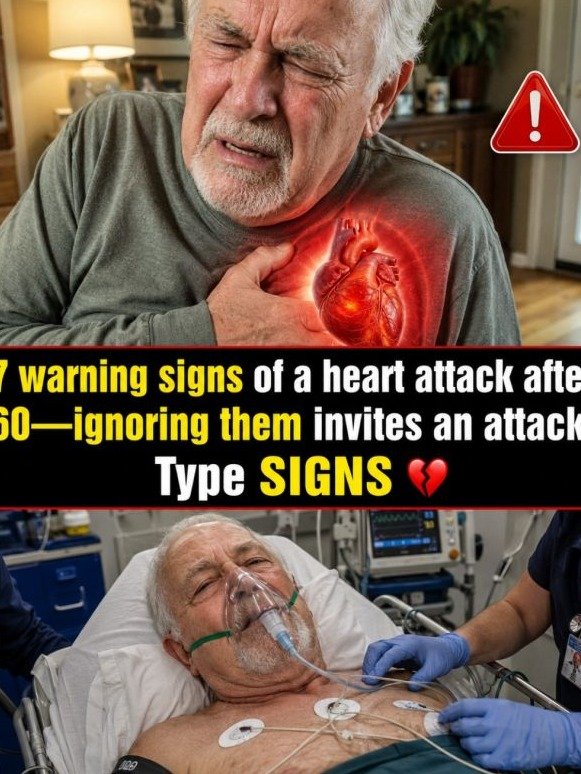
The 7 signs that should never be ignored
1. Chest pressure or squeezing: A persistent, heavy weight sitting in the center or left side of the chest.
2. Shortness of breath: Difficulty catching your air, even while resting, as if you are breathing through a tiny straw.
3. Spreading pain: Discomfort radiating into the arm, shoulder, back, neck, or jaw.
4. Cold sweat: Breaking into a clammy, pale sweat without physical exertion.
5. Dizziness or fainting: The room starts to tilt because your brain isn’t receiving adequate blood flow.
6. Sudden exhaustion: A bone-deep, overwhelming fatigue that feels completely out of proportion to your activity level.
7. Nausea or digestive distress: Often mistaken for simple indigestion, this is a common, frequently overlooked sign of heart trouble.
Why the warning signs hit harder after 60
After 60, our arteries are less forgiving. Years of plaque buildup mean that even a minor blockage can cause a catastrophic problem. It’s like forcing water through a pipe that has been rusted and bent for decades.
This isn’t always an immediate collapse. Sometimes, it’s a slow, progressive decline: less stamina on your morning walk, more difficulty with stairs, and frequent “need to sit down” moments. Your body is running out of margin, and it isn’t being dramatic—it’s struggling.
The most dangerous truth is that these warnings often look completely ordinary right up until they aren’t.
What to do when the body starts shouting
Never try to “tough it out” or wait to see if the symptoms pass. If you experience chest pressure, breathlessness, or sudden exhaustion, seek medical help immediately. The heart does not reward delay or stubbornness.
If symptoms fade and return, do not find comfort in the temporary relief. That is simply the fuse burning in short, dangerous bursts. Acting at the first sign of trouble drastically improves your chances of survival.
One thing that quietly makes everything worse
Most people ignore the signs because they are hoping for a “natural recovery.” That single habit—waiting for the pain to prove its severity—gives the blockage precious time to starve the heart muscle of oxygen. What happens before the crisis is just as critical as the crisis itself.
This article is for informational purposes only and does not replace professional medical advice. Please consult your healthcare provider for personalized guidance.