 By admin
 Spotting new gray hairs along your part can be more unsettling than many admit. The thought of frequent chemical dyeing — with its promise of dry, brittle, lifeless hair — often pushes people to seek alternatives. While improvising homemade remedies without proper knowledge isn’t ideal, the good news is that gentle, plant-based options exist for temporary color, enhanced shine, and hair fiber protection. And by the end, I’ll reveal a crucial detail almost no one checks before applying a homemade mix.
Why So Many Are Shifting Away from Harsh Dyes
As hair ages, it changes. It often becomes drier, more fragile, and sometimes more unruly. This is why many women and men in Mexico are increasingly looking for alternatives that are kinder to their scalp and ends. The challenge arises when social media promotes “miracle recipes” as complete solutions. This is where a dose of realism is essential.
A natural blend can indeed provide superficial color, shine, or a more uniform appearance, but its effect isn’t universal. The truth is: gray hair is often coarser and less predictable when absorbing plant pigments. This explains why some people are thrilled with the results, while others feel it “didn’t take.” And here’s the crucial point: not everything natural is automatically gentle, safe, or suitable for everyone.
What a Plant-Based Mix CAN Do for Gray Hair
When you hear about “Indian secrets” for hair, it often refers to traditional ingredients like pure henna, amla, indigo, or various plant oils. These have been used for centuries in beauty rituals to impart temporary color, body, and shine. Realistically, you can expect benefits such as:
- Partial or Moderate Visual Coverage: Gray hairs may appear less noticeable, but they won’t always match the rest of your hair perfectly.
- Enhanced Shine: Well-prepared mixtures can help hair reflect light better.
- Increased Hair Body: Some users report a thicker hair fiber to the touch.
- Reduced Reliance on Frequent Dyes: These methods can help extend the time between chemical dye applications, though not always replace them entirely.
But remember, the final outcome heavily depends on your hair’s base color, the percentage of gray, application time, and any prior products in your hair.
The Most Popular Plant Mix for Coppery or Reddish-Brown Tones
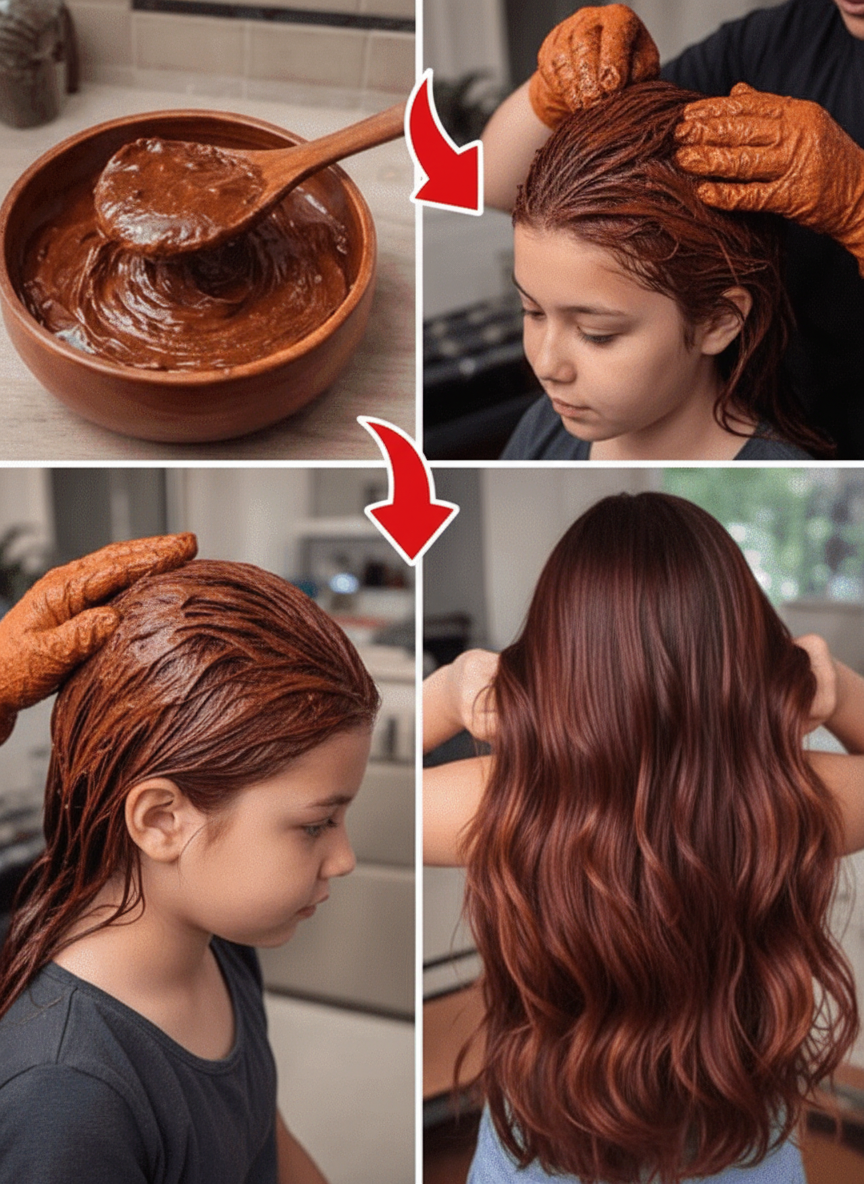
Cosmetic-grade pure henna is a widely favored option. It’s known for leaving coppery or reddish reflections and enhancing shine. On dark hair, the change might be subtle. On gray hair, the color tends to be more vibrant and noticeable.
A Guideline for a Temporary Plant-Based Hair Mask
Ingredients:
- 1 cup pure cosmetic-grade henna powder
- Enough warm water to form a thick paste
- 1 tablespoon plain yogurt or aloe vera gel (for a smoother texture, optional)
- 1 teaspoon coconut or argan oil (only if hair is very dry, optional)
Preparation:
- Place henna in a non-metallic bowl.
- Gradually add warm water, stirring until a thick, spreadable cream forms (not too liquid).
- If desired, add yogurt or aloe vera for a smoother consistency.
- Allow the mixture to rest for the time indicated by the manufacturer. This step is crucial for uniform color development and varies by brand.
How to Apply Without Damaging Your Hair
- First, wash your hair with a mild shampoo, avoiding heavy silicones before application.
- Towel-dry your hair until it’s damp, not soaking wet.
- Divide hair into sections and apply the mixture from roots to ends, wearing gloves. Focus on areas with more visible gray, like temples and the central part.
- Cover your hair with a shower cap and leave it on according to the product’s instructions.
- Rinse thoroughly with plenty of water. Many prefer not to shampoo on the same day to allow the color to set.
Here’s the interesting part: the final color can intensify over the next 24 to 48 hours.
Want a Darker Shade?
Some home routines combine henna with indigo in a two-step process to achieve brown or deeper tones. However, this method requires more care and a patch test. If done incorrectly, the color can be uneven. Therefore, for beginners, starting with a simpler henna application is the most sensible approach.