 By admin
 Imagine this: guests arrive at your home, and amidst conversation, they comment on the wonderful aroma wafting from your kitchen. You smile, knowing that delightful scent comes from your very own homegrown anise plant. However, cultivating herbs isn’t always straightforward; many home gardeners struggle with plants that don’t thrive, seeds that refuse to sprout, and leaves that wilt prematurely. But there’s a simple trick that can change all that… and we’ll reveal it at the end of this article.
🌱 Choosing Your Pot and Anise Seeds
To begin your anise cultivation journey on the right foot, selecting the appropriate container and fresh seeds is crucial. Your pot should feature excellent drainage and ample space for root development.
- Essential Tip: Opt for pots 8-10 inches (20-25 cm) in diameter for a robust plant.
- Seed Quality: Always use fresh seeds; older ones may not germinate reliably.
- Soil Matters: Employ light soil, rich in organic matter, with a neutral pH.
Quick Suggestion: Enhance initial nutrition by mixing garden soil with compost.
💧 Watering and Ideal Location
Anise demands a precise balance of moisture – neither too much nor too little. A common mistake is overwatering, which can lead to root rot and unhealthy plants.
- Practical Guide: Water only when the topsoil feels dry to the touch.
- Avoid Puddles: Ensure no standing water collects in the pot or saucer.
- Sunlight Needs: Your plant requires direct sunlight for at least 4-5 hours daily.
Professional Tip: If growing indoors, place your anise pot near a south-facing window for maximum light exposure.
🌿 Germination and Initial Care
Germinating anise isn’t overly complex, but it does require patience and consistent attention. Expect seeds to sprout within 10 to 14 days under optimal conditions.
- Key Steps: Gently moisten the soil without making it waterlogged.
- Temperature Control: Maintain a consistent temperature between 68-77°F (20-25°C) to encourage germination.
- Handle with Care: Avoid moving the pot excessively, as young roots are delicate.
What Many Don’t Know: Covering the pot lightly with plastic wrap can help maintain humidity and accelerate germination.
🌸 Care During Growth
Once your seedlings emerge and begin to grow, it’s time to nurture their development through light pruning, fertilization, and pest management.
- Practical Checklist: Fertilize with compost every 3-4 weeks.
- Pruning: Prune any dry or damaged leaves to stimulate new growth.
- Pest Watch: Regularly inspect for aphids or mealybugs and remove them manually if found.
Expert Advice: A gentle solution of water with a little mild soap can effectively eliminate pests without harming your plant.
🌾 Harvesting and Using Anise
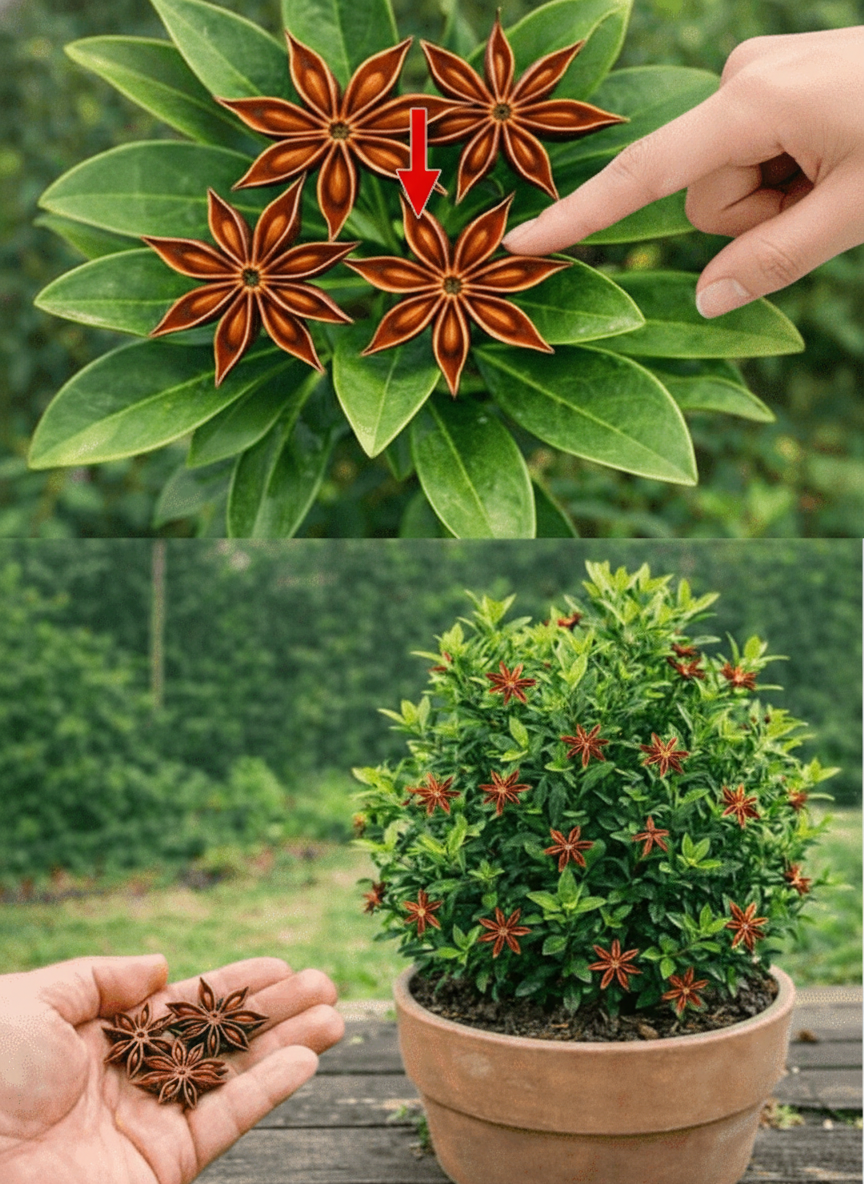
The most exciting part is witnessing the fruits of your labor! Anise fruits are easily recognized by their distinctive star shape and characteristic aroma.
- Harvesting Recommendations: Wait for the fruits to dry on the plant before collecting them.
- Storage: Store harvested fruits in airtight jars to preserve their potent aroma.
- Culinary & Aromatic Uses: Use dried anise fruits in infusions, desserts, or as a fragrant decoration.
Important Note: Fresh anise fruits should not be stored for long periods as they quickly lose their aroma.
📋 Comparative Table: Watering vs. Sun Exposure
| Aspect | Insufficient Watering | Excessive Watering | Ideal |
|---|---|---|---|
| Leaves | Wilt | Yellowish | Green and firm |
| Roots | Weak | Rotten | Strong and deep |
| Flowering | Sparse | None | Abundant |
| Fruit Aroma | Weak | Mediocre | Intense and lasting |
💡 Final Pot Cultivation Tips
- Rotate your pot weekly to ensure all leaves receive adequate light.
- If seedlings are too close together, gently separate them to prevent competition for resources.
- Maintain cleanliness around the pot; fallen leaves can attract fungi.
And here’s the exciting trick we promised: A small amount of cinnamon water applied around the soil can significantly enhance the anise’s aroma and protect the plant from fungal issues!
❓ Frequently Asked Questions (FAQ)
- Can I grow anise indoors?
Yes, provided it receives sufficient direct light and has good air circulation. - How long does it take for anise to bear fruit?
Generally 4-6 months from germination, depending on light and watering conditions. - Is it necessary to fertilize with chemical products?
No, compost or organic fertilizers are sufficient and safer for consumption.
Disclaimer: This guide is for informational and gardening purposes only. It does not substitute professional medical or nutritional advice.