 By admin
 The tongue, often overlooked, is a remarkable mirror reflecting our internal health. From hydration and nutrition to oral hygiene and overall body balance, subtle changes in its appearance can offer early warnings about our daily habits. Ignoring these signals might allow minor issues to escalate into bigger health concerns. By simply understanding what different tongue colors may indicate, you gain a powerful tool to spot clues and adjust your routine before problems go unnoticed.
A Healthy Tongue: What “Normal” Usually Looks Like
A healthy tongue is typically light pink, moist, and covered with tiny bumps called papillae, which aid in taste and food movement. Medical professionals often examine the tongue first due to its ability to reflect overall wellness.
- Soft pink color
- Slight white coating (from normal bacteria)
- No cracks, swelling, or unusual patches
The tongue constantly renews itself, meaning temporary changes can appear and disappear with improved habits. However, persistent color shifts warrant attention.
White Tongue Coating: Often Linked to Oral Imbalance
A white tongue is a common observation, occurring when bacteria, dead cells, and debris accumulate on its surface. Contributing factors include:
- Poor oral hygiene
- Dry mouth (often due to medications for blood pressure or allergies)
- Smoking or alcohol use
- Certain medications
- Fungal overgrowth (e.g., oral thrush)
Simple daily habits can significantly improve this: staying hydrated, gently cleaning the tongue with a scraper, and maintaining regular dental visits. Most cases are mild and reversible with better hygiene.
Bright Red Tongue: What It Might Suggest
A bright red or “glossy” tongue often appears smoother than normal. This can be a signal for:
- Vitamin deficiencies (particularly B vitamins like B12 or folate)
- Certain infections
- Irritation from spicy or acidic foods
- Allergic reactions to foods or dental products
While tongue color alone doesn’t confirm a deficiency, it acts as a prompt to review your diet and overall nutrition. Incorporating foods like eggs, fish, leafy green vegetables, yogurt, and whole grains can support oral and general health, often restoring normal color over time.
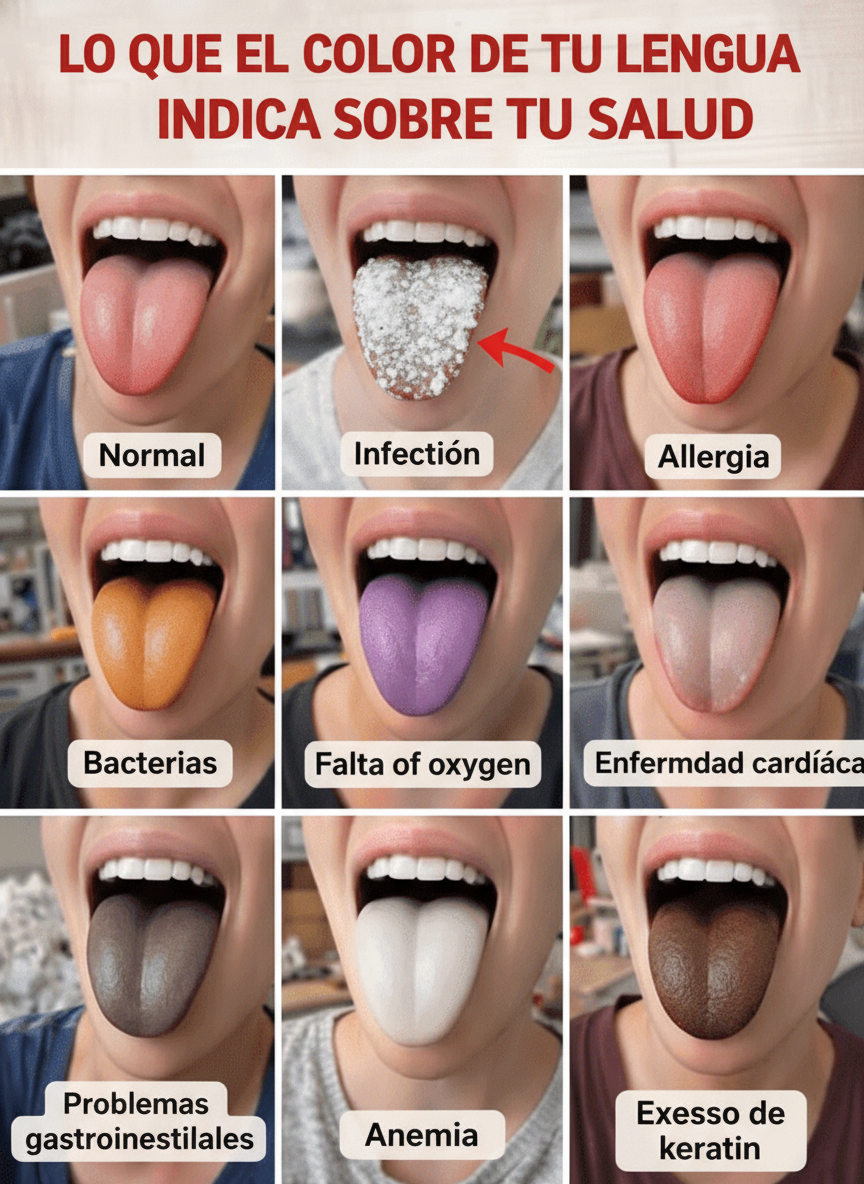
Purple or Bluish Tongue: A Circulation Clue
Less common, a purple or bluish tint may indicate temporarily reduced oxygen circulation in the blood. Potential reasons include:
- Cold exposure
- Circulatory changes
- Breathing difficulties
- Certain heart or lung conditions
Temporary shifts can also occur after cold weather or consuming dark foods. However, if this unusual color appears alongside fatigue, shortness of breath, or dizziness, seeking medical guidance is crucial.
Pale Tongue: Sometimes Associated With Low Iron
A pale or almost white tongue can sometimes signal low iron levels, as iron is vital for red blood cell production and oxygen transport. Other subtle signs of low iron may include:
- Fatigue
- Pale skin
- Weakness
As with other indicators, tongue appearance alone isn’t diagnostic. Doctors typically combine blood tests, symptom review, and physical examination for a complete picture. Iron-rich foods like lean meats, beans, spinach, pumpkin seeds, and lentils can make a positive difference in your diet.
Dark or Brown Tongue: Often a Lifestyle Signal
A dark brown or black tongue, sometimes known as “black hairy tongue,” can be alarming. While often harmless, it’s typically linked to lifestyle factors such as poor oral hygiene, smoking, excessive coffee/tea consumption, or certain medications. Improving oral care and adjusting habits usually resolves this condition.
”
}
“`